Cosmetic Manufacturing Process: How Skincare Is Made


Cosmetic Manufacturing Process: How Skincare Is Made


The cosmetic manufacturing process is a carefully managed system that transforms raw materials into safe, effective, and high-quality cosmetics. Modern cosmetics manufacturing combines science, technology, and strict quality control to ensure each cosmetic product meets industry standards and aligns with customer expectations.
The beauty industry relies on a multi-stage manufacturing process designed to deliver consistent product quality, safety, and performance.
Not medical advice. This article explains how cosmetics are formulated and manufactured for educational and informational purposes only. It does not describe how to use any cosmetic, and it is not medical, dermatological, or regulatory advice. Talk to a qualified healthcare or skincare professional before using any cosmetic product, and consult the applicable regulations in your market before manufacturing or selling one.
7 Key Stages of Cosmetics Manufacturing
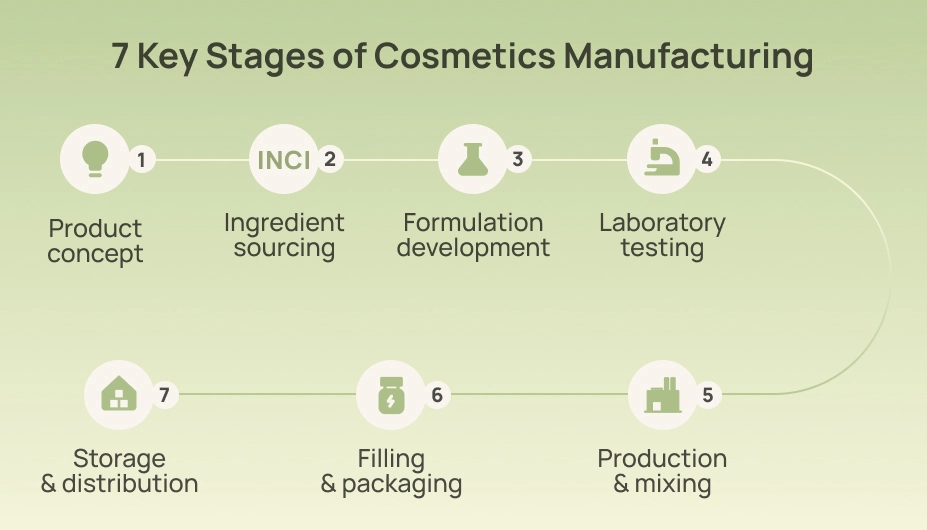
A typical manufacturing process consists of multiple steps, all of which must be executed with precision to ensure the finished product is safe, stable, and effective.
7 key stages include:
- Product concept definition
- Ingredient sourcing
- Formulation development
- Laboratory testing
- Production and mixing
- Filling and appropriate packaging
- Storage and distribution
Cosmetics manufacture requires facilities that meet strict hygiene and cleanliness standards to prevent contamination.
Ingredient Sourcing and Raw Materials
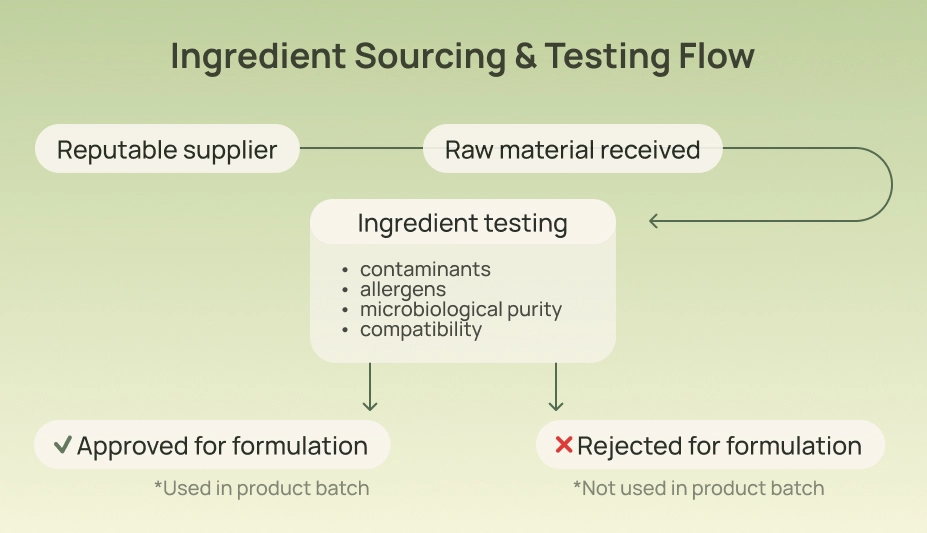
The first step in any production process involves acquiring raw materials. The purchasing department sources high quality ingredients from reputable suppliers, ensuring they comply with all industry regulations and regulatory requirements.
Proper ingredient sourcing involves selecting suppliers who follow good manufacturing principles and provide tested, reliable components.
 KEY POINT: The quality of the finished product depends directly on the quality of the ingredients used. Ingredient testing is essential for confirming purity, verifying that no harmful substances or impurities are present, and ensuring compatibility with the intended skincare product.
Ingredient testing includes checks for:
- contaminants
- allergens
- microbiological purity
- ingredient compatibility
Correct ingredient selection is vital to avoid separation, instability, or loss of effectiveness within the formulation.
Formulation Development: Creating a Cosmetic Product
A team of cosmetic chemists creates a product formulation that meets performance expectations, aligns with the target audience, and fits the intended cosmetic line. This step of the process of cosmetics defines how the formula should look, feel, and behave on the skin.
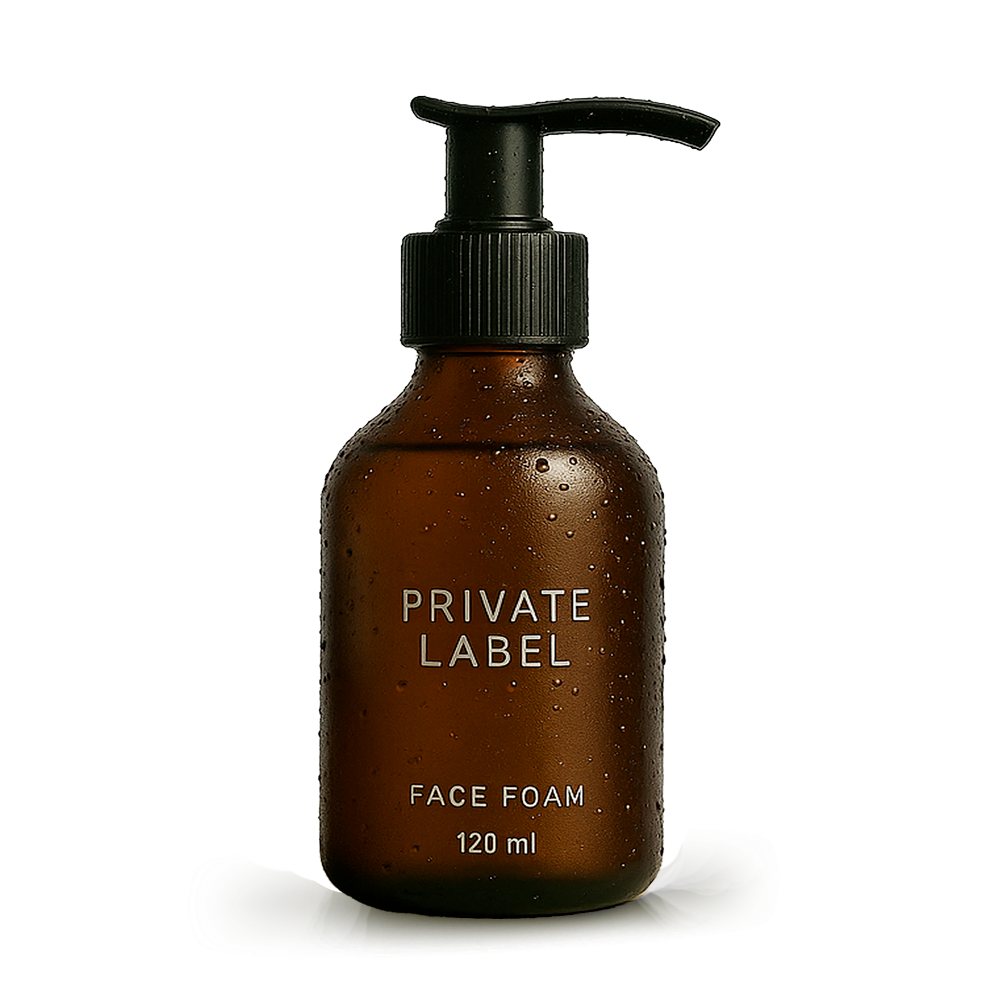
A clear product concept and detailed brief are crucial when creating private label cosmetics tailored to a specific target audience and market positioning. For brands that want to shorten development timelines, white label cosmetics based on pre-tested formulas can be a strategic starting point before moving to fully custom development.
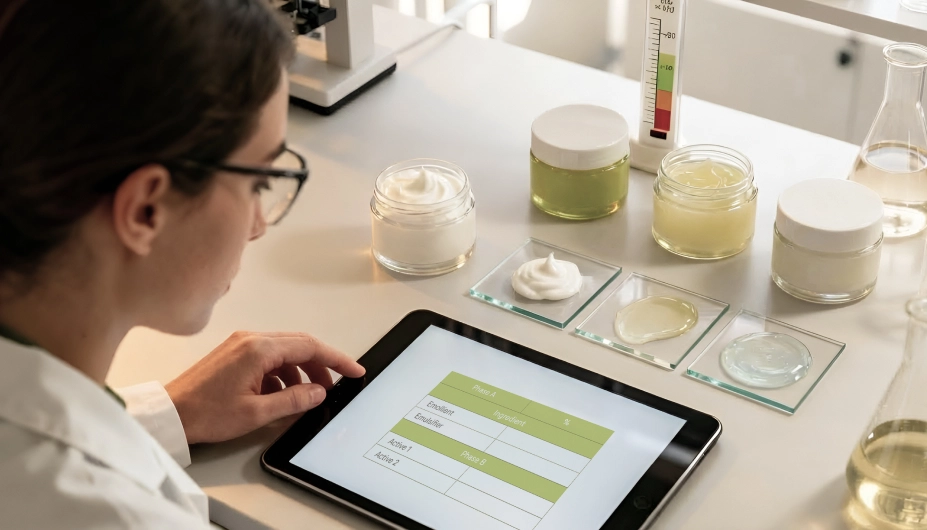
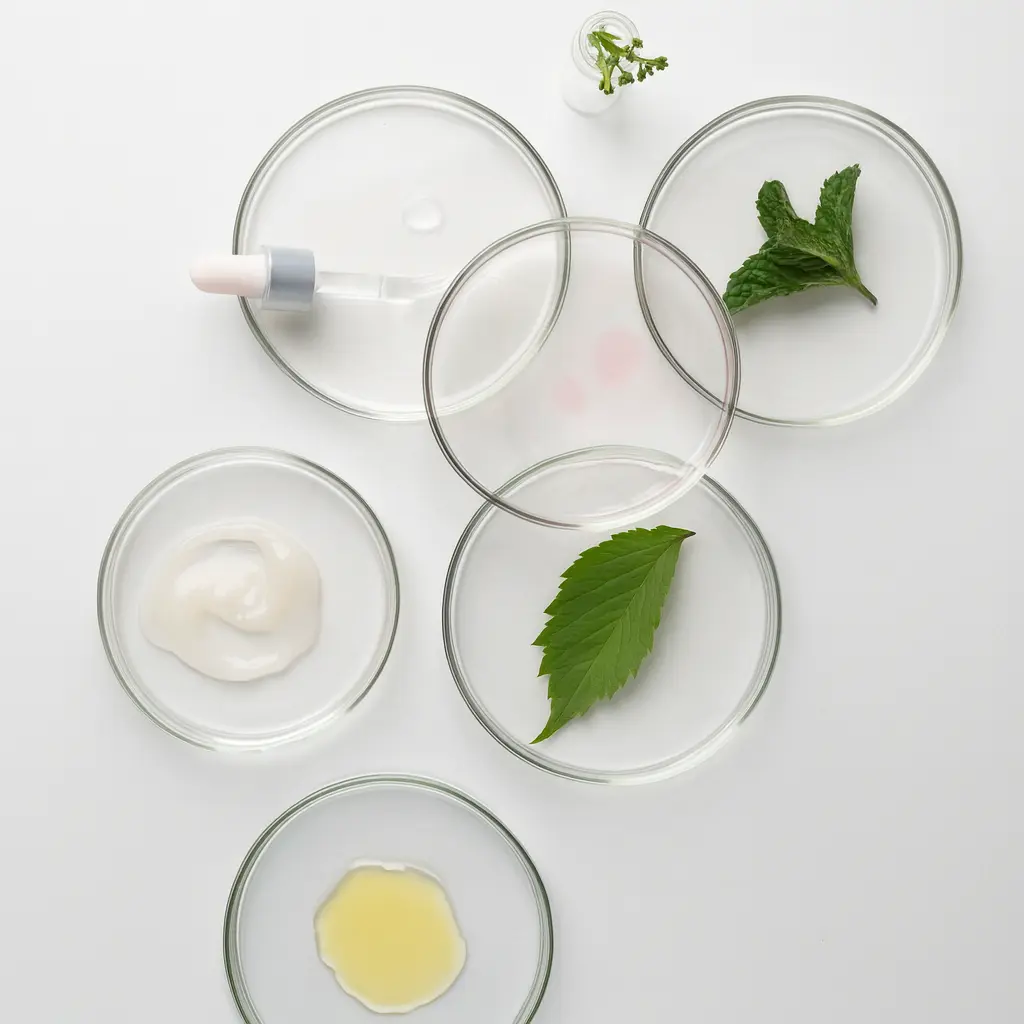
Chemists select active ingredients, emollients, pigments, emulsifiers, preservatives, and other ingredients that help achieve specific goals. Balancing ingredient properties is crucial to achieve the desired consistency, texture, skin feel, and stability.
Formulation development also considers:
- preferences of consumers
- ingredient compatibility
- market trends
- required ph value
- effectiveness of active ingredients
- inclusion of substances such as hyaluronic acid or anti aging complexes
The resulting formulation must ensure that the final product is stable, safe, and effective.
Quality Control and Regulatory Compliance
Quality control ensures each batch of cosmetics meets strict quality standards. This includes repetitive testing, risk assessment, microbiological evaluation, and ingredient verification.
Regulatory compliance ensures that the manufacturer meets local and global industry standards, including good manufacturing practices, hygiene protocols, and detailed documentation.
Testing procedures include:
- microbiological testing
- irritation and stability testing
- compatibility tests
- verification of viscosity, colour, and aroma
- confirmation of shelf life
Robust quality management systems help maintain high standards and ensure repeatable results through every stage of the production process.
Cream-Based Textures in Cosmetics Manufacturing
Cream-based formulations are among the most well-known various types of cosmetics. Creating these textures requires a structured manufacturing process that ensures stability and performance.
Creams
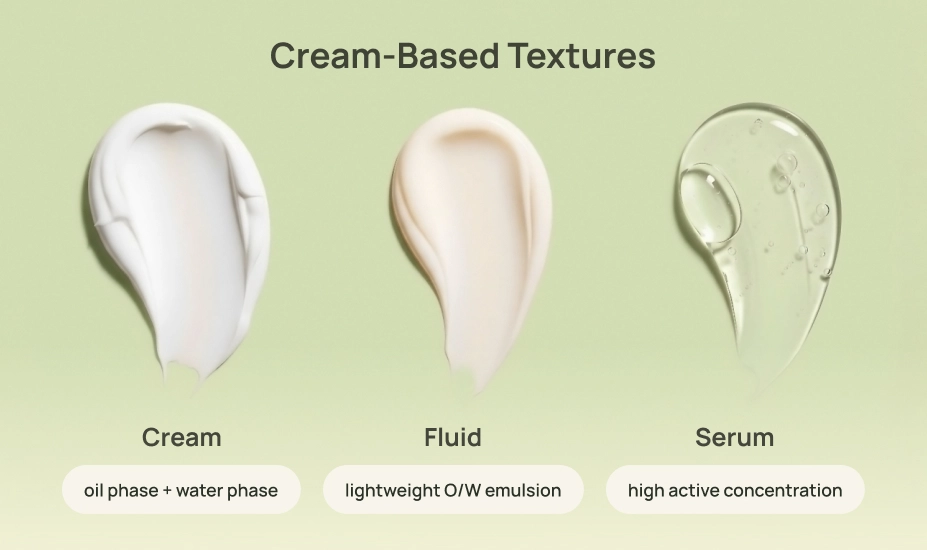
Creams are emulsions consisting of an oil phase and a water phase. During mixing, these phases are combined at controlled temperatures, often using homogenization to obtain a uniform texture.
Maintaining temperature and following quality control steps ensures a stable emulsion that does not separate during its shelf life.
Fluids
Fluids are lighter versions of creams, created using a similar production process, but with modified ratios of water, oils, and emulsifiers.
Formulators integrate active ingredients like hyaluronic acid to provide targeted benefits while preserving a light and fast-absorbing texture.
Serums
Serums often contain higher concentrations of active ingredients and require precise mixing to maintain stability.
These formulations are designed to be highly penetrative, which makes ingredient purity, compatibility, and testing especially important.
Liquid Textures
Liquid cosmetics require precise control of viscosity, stability, filtration, and clarity. In manufacturing, these products often undergo fine filtration, degassing, and microbiological testing. Maintaining the correct pH value is especially important, as even small deviations can affect the effectiveness and tolerability of the formulation.
Lotions
Lotions feature lightweight emulsions, usually O/W systems with high water content, which require careful emulsifier selection to ensure stability. During the manufacturing process, formulators hydrate thickeners, dissolve humectants, and heat the oil and water phases to specific temperatures before homogenization. The mixing stage determines droplet size, viscosity, and long-term consistency. Additional cooling under agitation prevents separation and ensures a smooth, uniform feel.
Toners
Toners are water-based systems containing humectants, botanical extracts, mild acids, or soothing agents. Their production includes precise solubilization of actives and filtration for clarity. Ph value adjustment is a key important aspect, as incorrect acidity can cause irritation or destabilize ingredients. After mixing, toners undergo microbiological testing to confirm purity and ensure the product is safe for leave-on use.
Micellar Water
Micellar water consists of surfactant micelles dispersed in a clear aqueous solution. Creating this texture requires low-shear mixing to prevent foaming and maintain transparency. Surfactants must be added slowly and in specific order to form stable micelles that can dissolve oils and impurities. After production, the formula often passes through fine filtration to remove particulates. Stability checks ensure micelles remain uniform throughout the shelf life.
Foaming Textures
Foaming systems rely on surfactants, polymer thickeners, and pH regulators that work together to create a cleansing action with controlled foam density. Ensuring mildness is a core priority, as many foaming cosmetics are used daily. Production must ensure compatibility between surfactants and viscosity builders to prevent thinning or phase separation.
Foaming systems are widely used in daily facial cleansers, body washes, and hotel & SPA cosmetics, where gentle but effective cleansing is essential for a good guest experience.
Cleansing Gels
Cleansing gels typically begin with hydration of polymeric thickeners such as acrylates or cellulose derivatives. Surfactants are incorporated gradually to maintain clarity and consistency, while avoiding bubble formation during mixing. The formula may include humectants, soothing extracts, and conditioning agents. Stability testing evaluates viscosity shifts, colour changes, and microbial resistance. Correct viscosity is essential to ensure the gel dispenses smoothly and forms a pleasant lather.
Foaming Facial Wash
Foaming washes require a balanced blend of anionic, amphoteric, and sometimes nonionic surfactants to achieve rich but gentle foam. During the manufacturing process, formulators adjust ph value to maximize mildness while retaining cleansing performance. Air incorporation must be controlled; excessive aeration destabilizes foams and affects filling accuracy. The final formula undergoes multiple testing cycles, including foam height and foam stability assessments to ensure predictable performance for consumers.
Exfoliating Textures
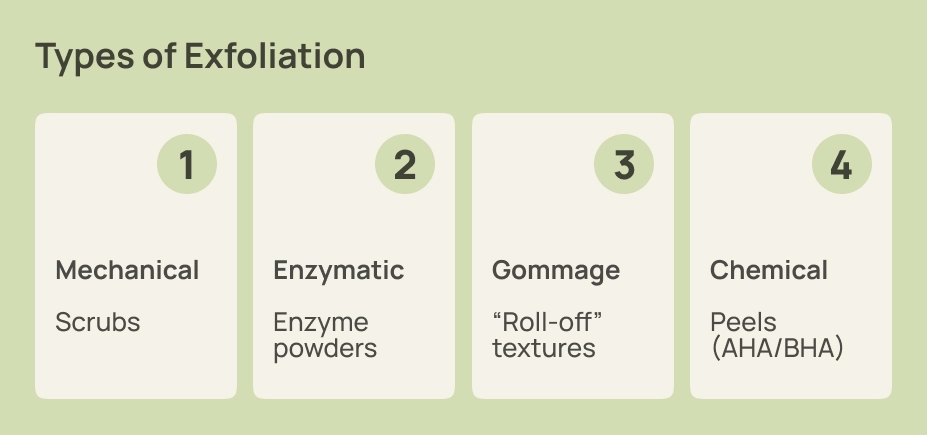
Exfoliating products require careful formulation because they interact with the skin’s upper layers. They can be mechanical, enzymatic, or chemical, and each type has its own technical production nuances. Precise dosing of actives, uniform distribution, and pH control are essential.
Scrubs
Scrubs combine abrasive particles (sugar, salt, bamboo, polymer beads) suspended in a gel or oil base. The mixing process must be slow to preserve particle integrity and ensure even distribution. Temperature control prevents melting or dissolving exfoliants. Formulation challenges include preventing sedimentation and ensuring particles stay suspended throughout the shelf life. Additional testing verifies abrasiveness level and microbial stability.
Enzyme Powder
Enzyme powders use actives such as papain or bromelain, which are sensitive to moisture and heat. Production must occur in low-humidity environments to maintain enzyme activity. Powders require uniform blending to prevent clumping and ensure consistent exfoliation. Anti-caking agents and absorbents are often added to enhance flow properties. Stability tests evaluate enzyme activity retention over time and exposure to varying temperatures.
Gommage
Gommage formulations rely on cellulose, gums, or carbomers that create a peelable texture when massaged on skin. Producing them requires precise hydration of polymers to achieve the correct elastic, stretchy consistency. Active ingredients and soothing agents are added at controlled temperatures to avoid destabilizing the gel network. Tests ensure the product “rolls off” consistently and does not dry too fast on the skin.
Peelings
Peelings contain acids such as AHAs or BHAs and require strict pH control to ensure both safety and efficacy. The order of ingredient addition is crucial because acids can destabilize thickeners or react with metal ions. Production uses acid-resistant mixing vessels and non-reactive tools. Stability checks ensure the acid concentration remains consistent throughout the final product’s lifecycle, while irritation testing verifies consumer tolerability.
The Mixing Stage
The mixing process is a crucial phase where ingredients are combined using industrial mixers.
Temperature control, homogenization, and agitation ensure a uniform blend that adheres to formulation guidelines.
This stage also involves:
- dispersing pigments
- creating emulsions
- ensuring even distribution of active ingredients
- verifying viscosity and consistency
Precision is essential to maintain quality and ensure the final product matches expectations.
Filling Process and Appropriate Packaging
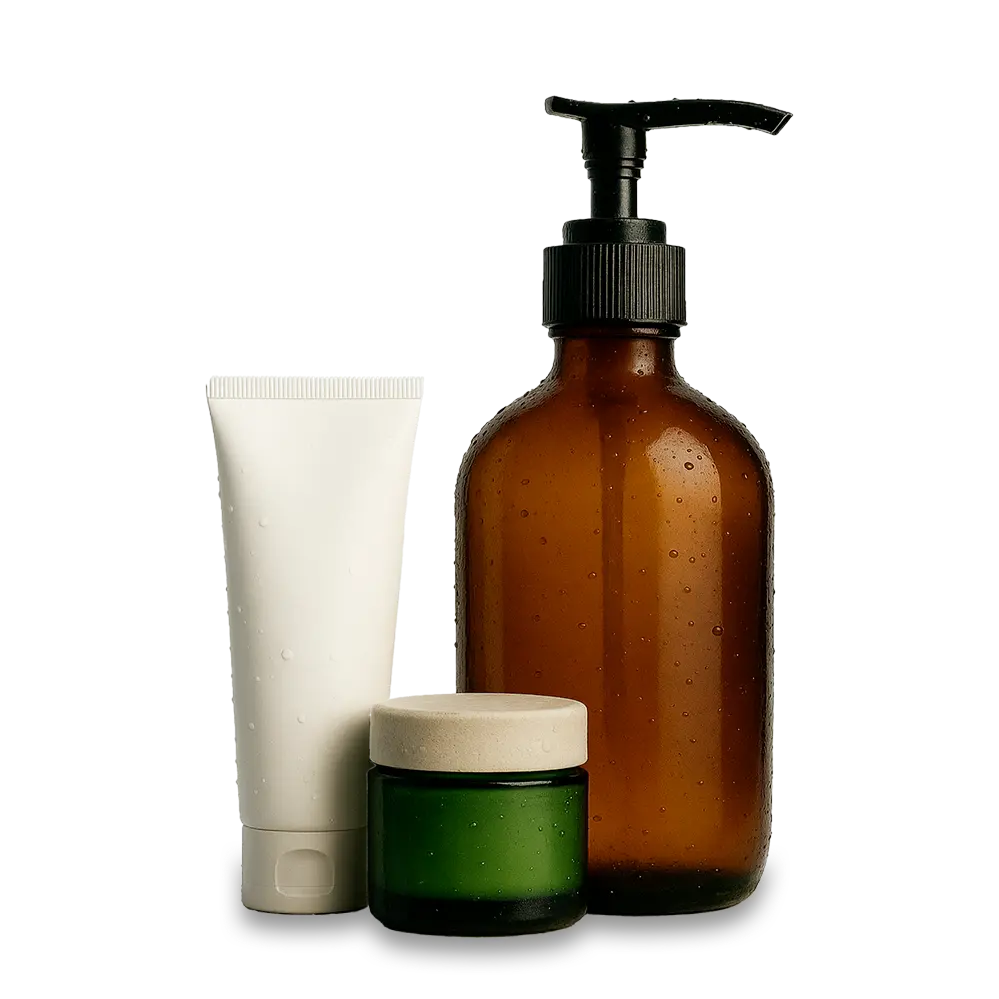
Once the formula becomes a stable finished product, it undergoes the filling process. Automated equipment fills creams, gels, and liquids into individual bottles or tubes.
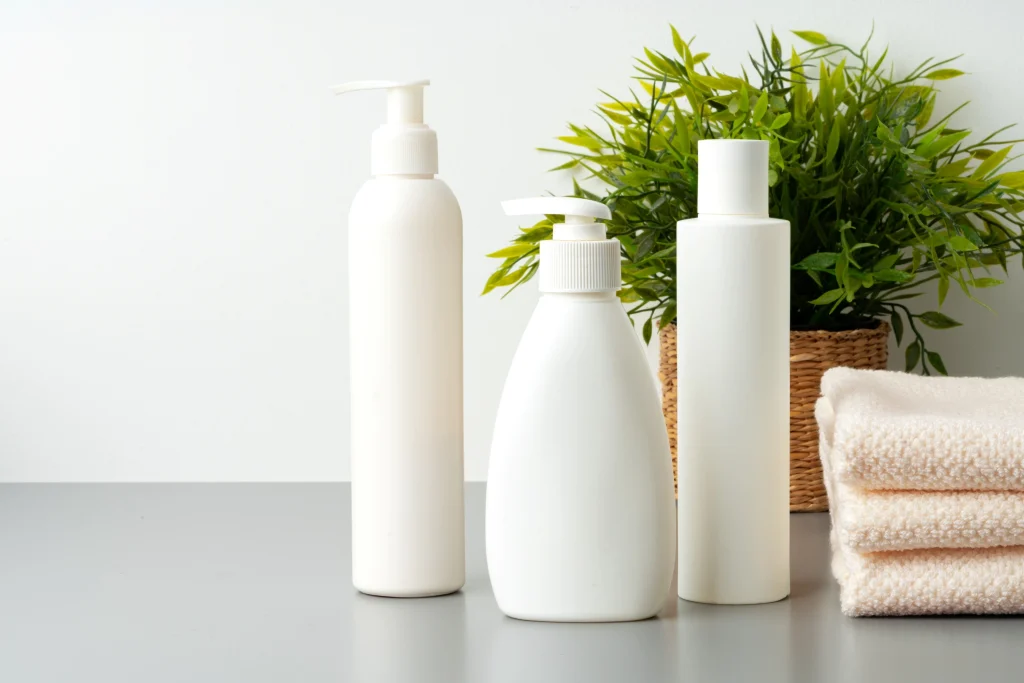
Proper packaging prevents oxidation, protects sensitive active ingredients, and helps prevent contamination.
The role of packaging includes:
- maintaining product integrity
- protecting from light and air
- ensuring customer safety
- extending shelf life
Correct packaging selection is crucial for both product protection and branding of a cosmetic line.
Distribution, Storage, and Quality Maintenance
The distribution system and ecommerce fulfillment are carefully managed to avoid extreme temperatures and handling conditions that could affect product quality.
Proper storage at every stage of the supply chain helps maintain stability and extend shelf life before products reach customers.
For brands that also sell supplements or sell vitamins online, reliable fulfillment and controlled warehousing are crucial to keep products within the required temperature and humidity ranges.
Manufacturers and logistics partners follow industry standards, including documentation of batches, expiry dates, usage instructions, and traceability, to ensure consistent quality and regulatory compliance.
Final Quality Control and Testing
Before shipping, each finished product goes through final testing to confirm compliance with all quality standards.
Tests verify:
- colour consistency
- texture and viscosity
- fragrance uniformity
- microbial purity
- packaging integrity
Strong quality culture, employee training, and control procedures ensure high quality products that meet expectations of consumers and customers.
Conclusion
The cosmetic manufacturing process is a complex, multi-stage system that relies on scientific knowledge, advanced equipment, and strict good manufacturing practices.
From sourcing raw materials to creating stable emulsions and achieving perfect texture, every stage requires precision and expertise.
Thanks to controlled production, rigorous testing, and reliable packaging, the cosmetic industry delivers safe and effective skincare products that satisfy a wide range of customer expectations.
Why Brands Choose Merywood as Their Manufacturing Partner
At Merywood, we specialize in contract manufacturing of cosmetics, skincare & beauty products — from product concept and formulation development to production, quality control, filling, and appropriate packaging. Our facilities follow strict good manufacturing practices, meet all hygiene and cleanliness standards, and are equipped to produce a wide range of cosmetics, including cream-based, liquid, foaming, and exfoliating textures.
We source high quality ingredients only from reputable suppliers, verify all raw materials through extensive testing, and ensure every finished product meets global industry standards.
With a strong focus on innovation, safety, and consistency, Merywood supports brands in building a reliable cosmetic line that aligns with modern consumer expectations.
Whether you need small pilot batches or large-scale production, our team ensures precision, regulatory compliance, and exceptional product quality at every stage.