What is INCI: the International Nomenclature of Cosmetic Ingredients explained


What is INCI: the International Nomenclature of Cosmetic Ingredients explained


Cosmetics and personal care products travel across borders, languages, and regulatory systems. To keep ingredient communication consistent, the International Nomenclature of Cosmetic Ingredients (INCI) provides a shared naming framework that brands, producers, and regulators can rely on.
In short, INCI (sometimes searched as “inci international nomenclature of cosmetic ingredients”) is the naming standard behind most ingredient declarations.
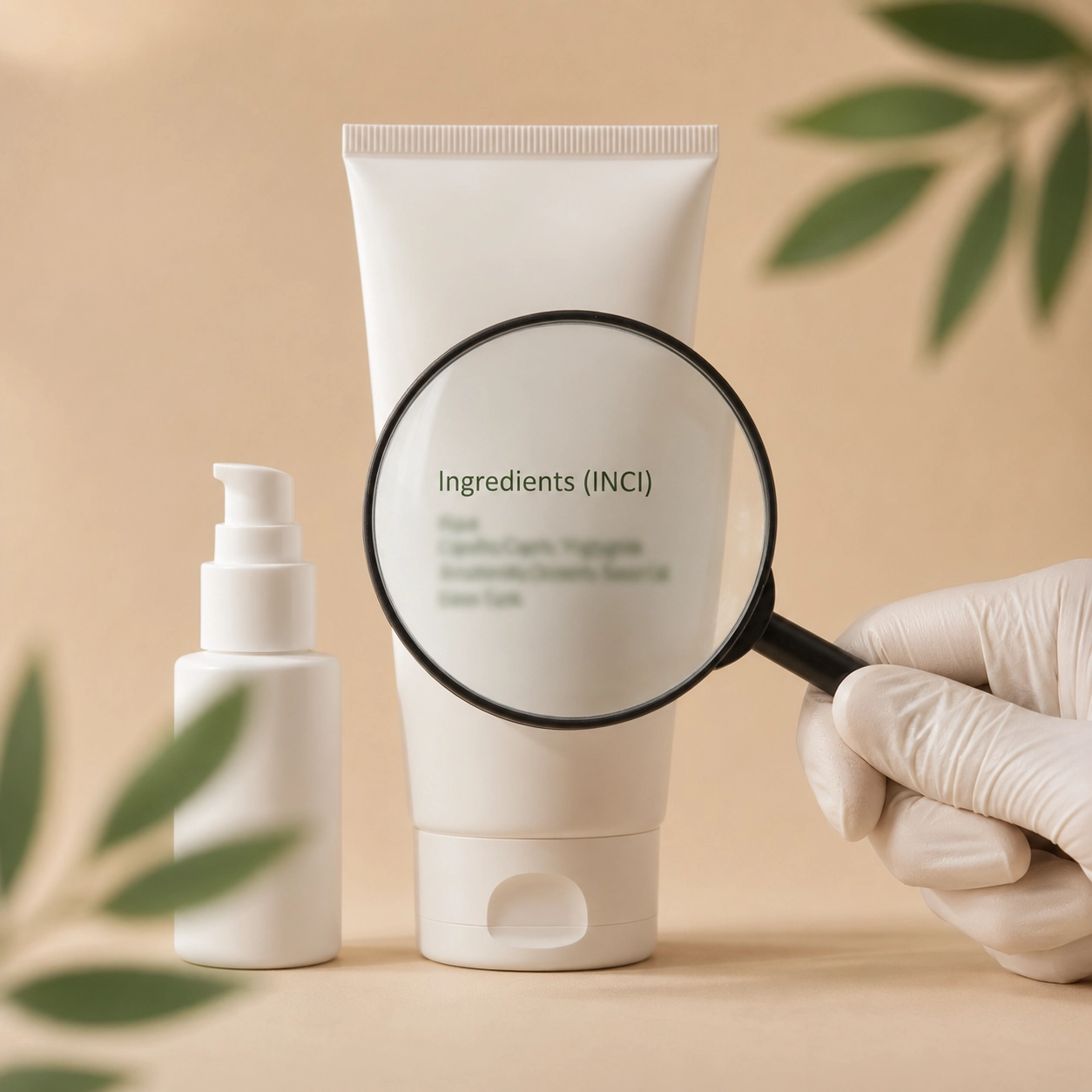
In practical terms, the standard is the standardized nomenclature used to name cosmetic ingredients on cosmetic product labels. It turns long, technical systematic names into terms that are more easily understood on packaging, while still being precise enough for the cosmetics industry and regulatory bodies.
This article breaks down the intention of the standard, how the naming approach differs from CAS identifiers, how INCI names are assigned, and how to read label declarations so people can make informed choices.
Not medical advice. We do not describe how to use any cosmetic, and it is not medical, dermatological, or regulatory advice. Talk to a qualified healthcare or skincare professional before using any cosmetic product, and consult qualified regulatory advisors, along with the applicable labeling and ingredient regulations in your market, before manufacturing or selling one.
The intention and purpose of INCI
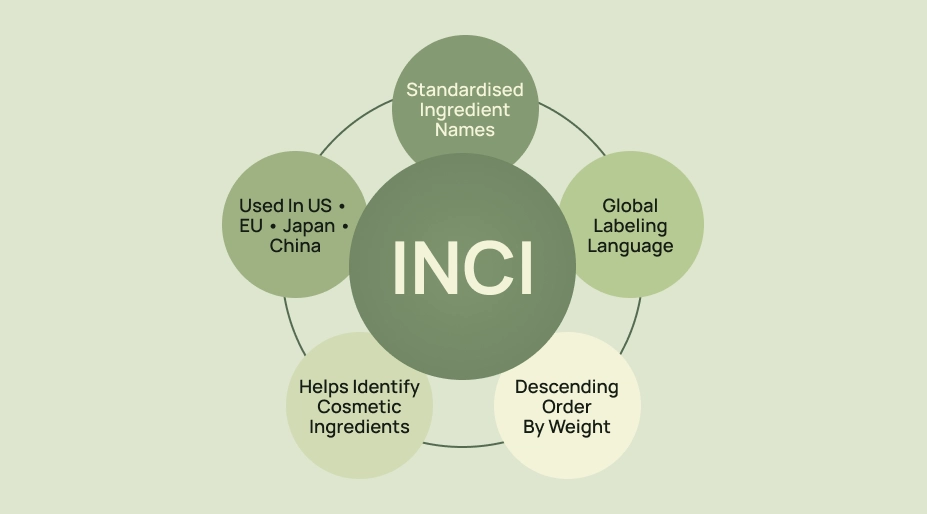
The purpose of this nomenclature is transparency: to help consumers and professionals identify cosmetic ingredients in a consistent way in many other countries, not just one market.
A second goal is trade facilitation. By using uniform names and a common international nomenclature, companies can sell cosmetics in multiple countries without translating every chemical detail into local naming conventions.
A third goal is risk awareness. Ingredient labels help people identify potential allergens, irritants, or triggers that could lead to adverse reactions on skin, especially for scent-sensitive users.
A quick history: who established the standard and why it matters
The International Nomenclature of Cosmetic Ingredients (INCI) was established in the early 1970s by the Personal Care Products Council, formerly known as the Cosmetic, Toiletry, and Fragrance Association (CTFA). That origin story still shapes how cosmetics and toiletry products are documented across markets.
Today, the INCI list is maintained by the Personal Care Products Council, which oversees the assignment of new ingredient names and the ongoing updates to the INCI name list.
Because the INCI list is continually reviewed and modified to reflect new ingredients and shifts in formulations, it operates as an evolving international nomenclature of cosmetic ingredients inci dictionary rather than a static book.
Where INCI is used globally
The INCI system is used in the United States, the European Union, China, Japan, and many other countries for listing ingredients on cosmetic product labels. Using INCI names is a legal requirement for many cosmetics and personal care products in many regions, including the European Union and the United States, which is why manufacturers treat INCI nomenclature as a compliance baseline for cosmetics packaging.
This global adoption reduces language barriers in the world of cosmetics and helps brands keep label declarations consistent across markets for cosmetic products and websites. It is also one of the practical reasons why teams working on contract manufacturing cosmetics pay close attention to correct INCI names early — long before packaging goes to print.
INCI database, INCI list, and “INCI name list”: what these terms mean
There are over 16,000 cosmetic ingredients listed on the INCI database, with more added each year. That number reflects the breadth of raw materials used across modern cosmetics — from basic solvents and surfactants to complex bioferments and botanical extracts.
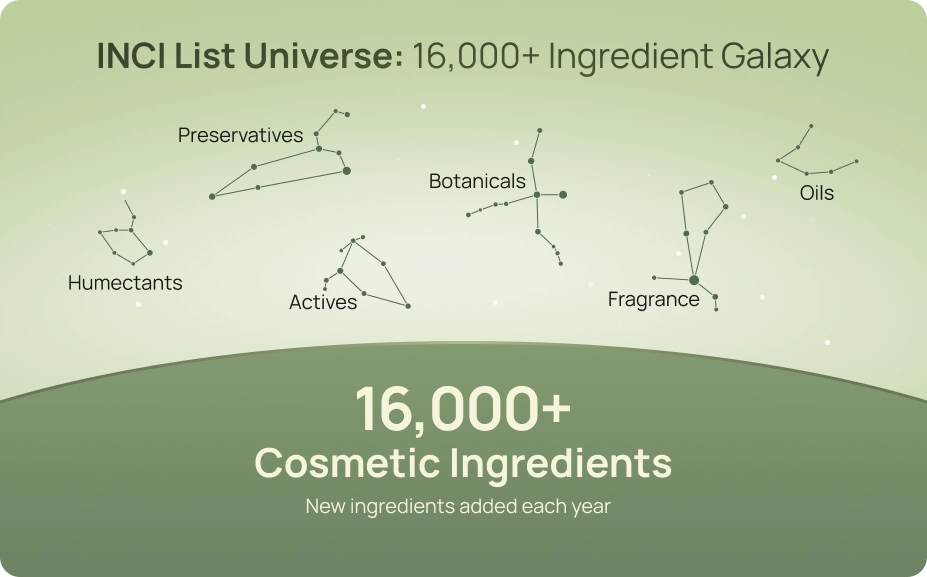
People often refer to the “INCI list” or an “INCI name list” when they mean the underlying international nomenclature of cosmetic ingredients database that stores the official naming convention for ingredient naming.
It is important to note a few exceptions: not every cosmetic ingredient has an INCI name, particularly ingredients derived from food sources in food processing contexts or novel materials that have not yet completed the naming process.
Where can I find the INCI list?
For day-to-day work in cosmetics and personal care products, two resources are commonly used.
- Internal supplier documentation and specification sheets often provide the relevant INCI names for raw materials (especially for established cosmetic ingredients such as glycerin, common oils, and standard emulsifiers).
- The EU Cosing database is a free online service where users can search for cosmetic ingredients, including their INCI names. It is especially helpful for checking ingredient identity and regulatory context in the European Union.
Together, these resources help teams identify cosmetic ingredients accurately while developing formulas and preparing label declarations for labels.
What is the difference between CAS and INCI?
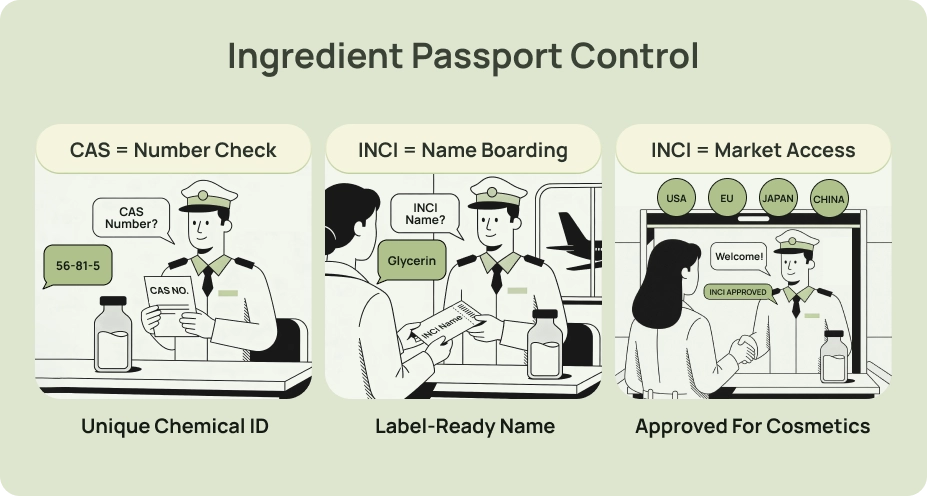
CAS numbers are numerical identifiers assigned by the Chemical Abstracts Service, intended to uniquely identify chemical substances across scientific and industrial contexts.
INCI names are human-readable standardised names used for cosmetics labeling and communication. They may differ from systematic chemical names and are often a mixture of scientific, English, and Latin elements.

Key point: CAS is an identifier for a substance; INCI is the official naming convention used to list ingredients on cosmetic product labels. A practical example is a supplier spec that shows both the CAS number and the INCI name for the same raw material.
How do I get an INCI name?
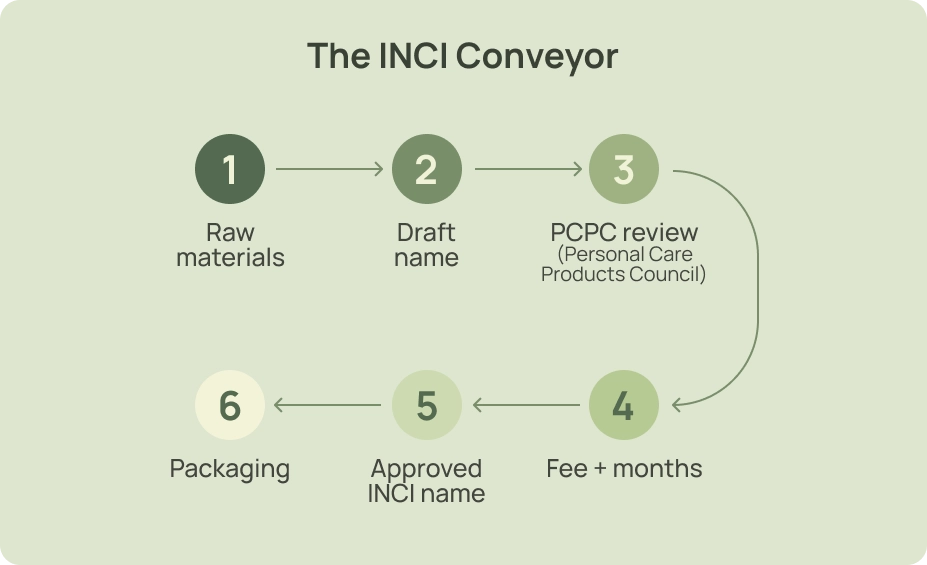
Companies can apply for an INCI name for their ingredients, which incurs a fee and takes several months to process. This application pathway is managed by the Personal Care Products Council, and it is typically handled as a formal regulatory-style submission.
In most cases, you work through the Personal Care Products Council process, submitting technical detail, origins, and supporting information about the ingredient and how it is used in cosmetics. If approved, the ingredient is assigned an INCI name that can be used in listing ingredients and in global documentation for cosmetic products.
What are the benefits of INCI?
The INCI system has many benefits for both consumers and the cosmetics industry.
- For people, ingredient labels make labels simpler to interpret and support careful selection, including the ability to avoid particular ingredients, common names, or fragrance triggers.
- For brands and manufacturers, INCI names reduce ambiguity, standardize communication with regulatory bodies, and enable multi-market label formats with fewer changes.
- For the world of trade, international nomenclature supports smoother cross-border compliance and faster product launch cycles.
How to read a cosmetic ingredient list
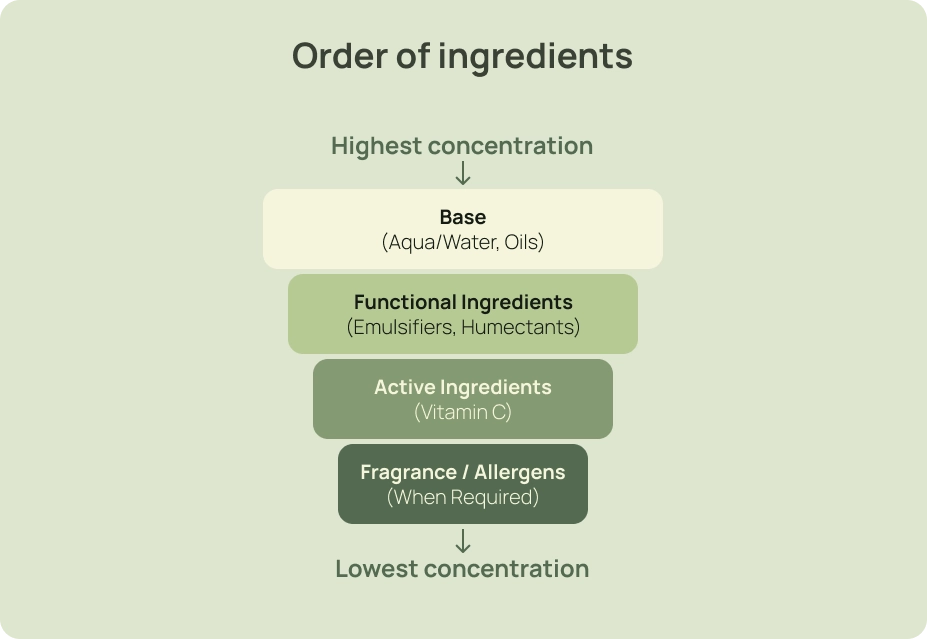
Ingredient lists on cosmetic products are generally written using INCI names and arranged in descending order of concentration by weight, so the most abundant ingredients appear first. This order helps consumers interpret a formula at a glance: if water, oil, or a solvent is first in cosmetics, it usually forms the base of the product; if actives appear later, their concentration may be lower.
There are, however, a few exceptions in how ingredients are handled across regulations, especially when fragrance components or trace materials are involved.
What is the order of ingredients in INCI, including fragrances and allergens?
- Ingredients must be listed using their INCI names from highest to lowest concentration by weight on product labels, but fragrances may be listed under general terms like Parfum or Aroma.
- In addition, some brands reference guidance from a fragrance association (for example, industry-wide standards bodies) when managing fragrance materials and allergen disclosure.
- At the same time, specific allergens must be individually listed if present above certain concentrations, which is one way the INCI system helps people identify potential allergens.
- This is where international nomenclature and regulations intersect: labeling rules can dictate when an allergen must be declared by name rather than covered by a generic fragrance term.
Chemical vs botanical naming: why some INCI names look like Latin
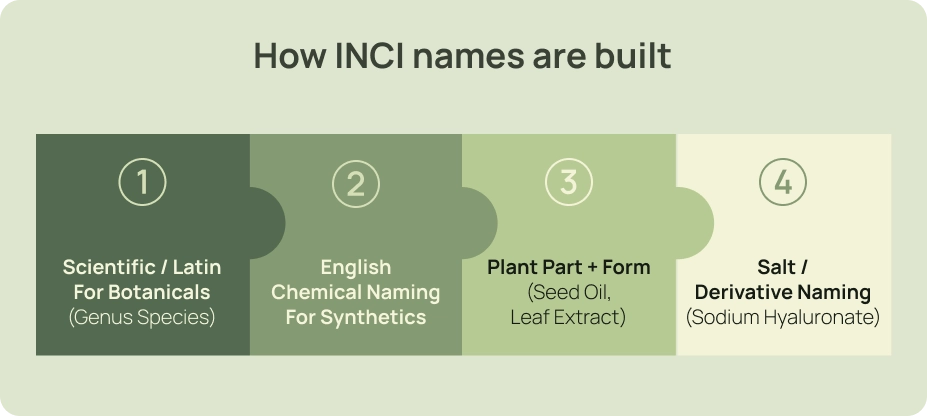
Chemical ingredients are generally listed using their common English chemical names, while botanical ingredients are listed using their scientific Latin names (often Genus species) alongside plant-part detail.
That is why you may see sodium hyaluronate instead of “hyaluronic acid” in a formula, or a botanical presented as a scientific name rather than a marketing-friendly common name. This is one reason common names can be misleading in cosmetics documentation.
INCI names often differ from systematic names, and the mix of scientific names, Latin structure, and English descriptors is intentional: it forms a practical international nomenclature of cosmetic ingredients inci standard that works across countries.
Oils in cosmetics: how “oil” and seed oil appear in INCI
In cosmetics, oil can be a key part of the base, the sensorial profile, and the barrier-support story. The word oil is not just marketing language; it is frequently part of the INCI naming of botanical materials.
For example, a seed oil might appear as a botanical scientific name plus the term oil, and an Olea-derived oil will typically include olive and oil in the INCI-style naming.
When you build cosmetics formulas, the oil phase may include more than one oil: a lightweight oil for slip, a richer oil for cushion, and a stabilising oil that supports skin feel. An example is combining seed oil with olive oil to balance texture.
This is also why cosmetic ingredients teams track oil choices closely: different oil sources can affect oxidation, odor, and compatibility with active ingredients in cosmetics.
Nanomaterials and modern labeling detail
Ingredients present as nanomaterials must be explicitly indicated by adding (nano) after the INCI name.
This notation is a compliance signal for regulators and consumers, reflecting the fact that cosmetics formulations can include engineered materials with distinct properties and performance considerations.
How do I find the INCI name of a product?
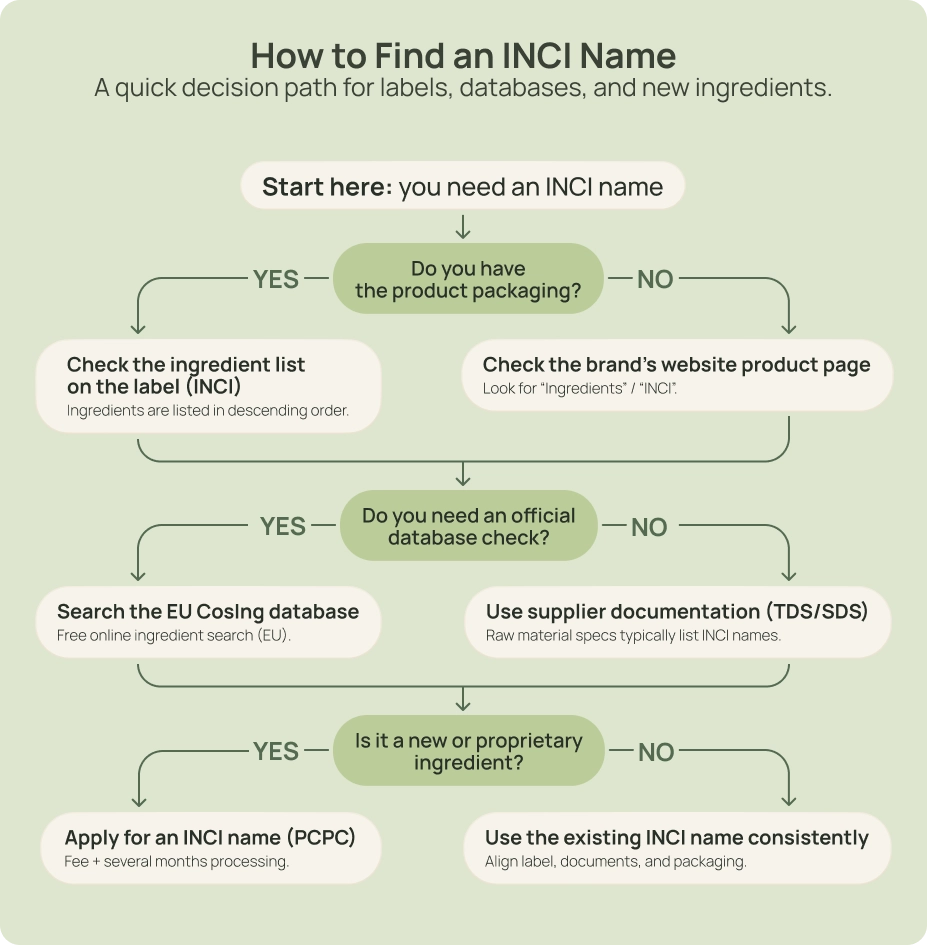
- Start with the packaging. Cosmetic product labels typically include a full INCI ingredient list, either on the outer carton or the primary pack.
- If the label is missing or abbreviated, check the brand’s website product page or regulatory documentation; reputable cosmetics manufacturers keep full label declarations accessible for buyers.
- For professional verification, cross-check raw materials documentation and (when relevant) the EU Cosing database to confirm the correct INCI names.
How does INCI Beauty work?
INCI Beauty is a consumer-facing site and app that lets users search or scan cosmetics and then interprets ingredient lists based on ingredient categories, common flags, and reference databases. In broad terms, it maps INCI names to explanations (for example, whether an ingredient is a scent component, a preservative, an oil, or an antioxidant) and presents a simplified view so people can compare cosmetic products.
As with any ingredient database tool, it is best used as a starting point for understanding labels — not as the sole authority on regulatory compliance or risk.
CIR and what inclusion in INCI does (and does not) mean
The Cosmetic Ingredient Review (CIR) was established in 1976 to assess the safety of ingredients used in cosmetics.
However, the listing of an ingredient in INCI does not mean the ingredient has been assessed for safety. Safety evaluations are performed through different mechanisms, including regulatory bodies and scientific review processes.
This distinction matters because consumers sometimes assume that an INCI list is an exhaustive list of “approved” ingredients. It is an exhaustive list of official names for labeling and identification, not a blanket approval.
Practical examples for reading INCI on cosmetics packaging
Below are a few practical, simplified examples that show how cosmetic product labels typically list cosmetic ingredients. The goal is to illustrate structure and reading logic (not to label products as “good” or “bad”).
Example 1: Basic face moisturizer (emulsion)
INCI: Aqua (Water), Caprylic/Capric Triglyceride, Glycerin, Cetearyl Alcohol, Glyceryl Stearate, PEG-100 Stearate, Cetyl Alcohol, Dimethicone, Phenoxyethanol, Ethylhexylglycerin, Carbomer, Triethanolamine, Parfum (Fragrance), Limonene.
How to read it:
-
Base/carriers: Aqua (Water) + emollient oil (Caprylic/Capric Triglyceride)
-
Functional ingredients: fatty alcohols + emulsifiers (Cetearyl Alcohol, Glyceryl Stearate, PEG-100 Stearate)
-
Humectant: Glycerin
-
Preservation: Phenoxyethanol + Ethylhexylglycerin
-
Fragrance + allergens: Parfum and a declared allergen (Limonene)
Example 2: Serum with hyaluronic acid (water-based)
INCI: Aqua (Water), Glycerin, Propanediol, Sodium Hyaluronate, Panthenol, Hydroxyethylcellulose, Disodium EDTA, Phenoxyethanol, Ethylhexylglycerin.
How to read it:
-
Base: mostly water
-
Hydration support: Glycerin + Propanediol
-
Active ingredient: Sodium Hyaluronate (hyaluronic acid derivative)
-
Texture: Hydroxyethylcellulose
-
Preservation: Phenoxyethanol + Ethylhexylglycerin
Example 3: Vitamin C serum (derivative format)
INCI: Aqua (Water), Propanediol, Glycerin, 3-O-Ethyl Ascorbic Acid, Butylene Glycol, Ferulic Acid, Tocopherol, Hydroxyethylcellulose, Phenoxyethanol, Ethylhexylglycerin.
How to read it:
-
Active ingredients: Vitamin C derivative (3-O-Ethyl Ascorbic Acid) + antioxidants (Ferulic Acid, Tocopherol)
-
Solvents/humectants: Propanediol, Glycerin, Butylene Glycol
-
Support: thickener + preservative system
Example 4: Cleansing gel (surfactant-based)
INCI: Aqua (Water), Cocamidopropyl Betaine, Sodium Lauroyl Sarcosinate, Glycerin, Acrylates Copolymer, Sodium Chloride, Citric Acid, Phenoxyethanol, Sodium Benzoate, Parfum (Fragrance).
How to read it:
-
Cleansing agents: surfactants come early (Betaine, Sarcosinate)
-
Support: Glycerin for skin feel; Acrylates + salt for viscosity
-
pH adjuster: Citric Acid
-
Preservatives/fragrance: listed later
Example 5: Hotel & spa format (compact label, still complete)
INCI: Aqua (Water), Sodium Laureth Sulfate, Cocamidopropyl Betaine, Glycerin, Sodium Chloride, Citric Acid, Parfum (Fragrance), Sodium Benzoate, Potassium Sorbate.
Why it’s relevant:
Even on compact packaging formats like hotel & spa cosmetics, the ingredient list still follows the same principles: descending order (highest to lowest concentration) and standardized INCI names for transparency.
How to categorize skincare ingredients for labeling and formulation work
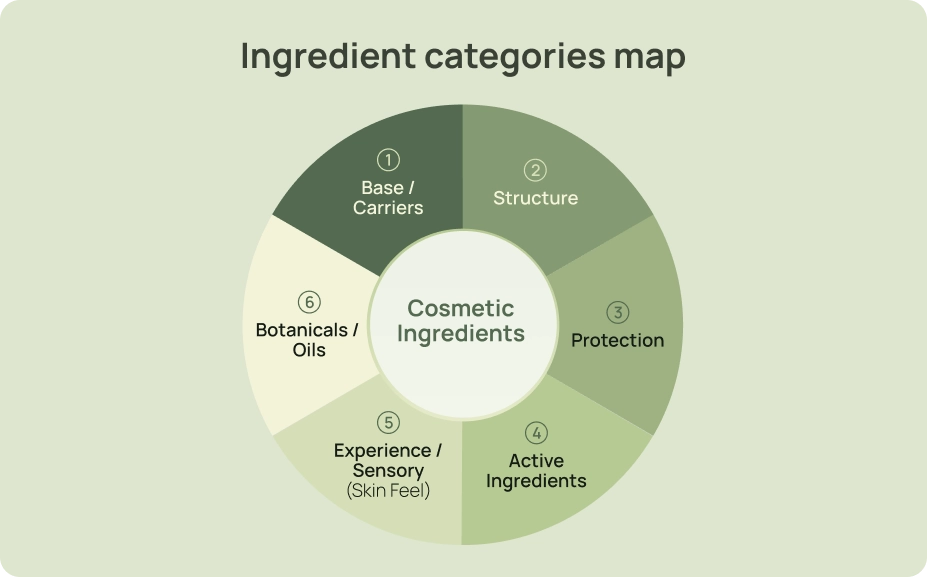
A practical approach is to group cosmetic ingredients by function in the formula:
- Base and carriers: water, oil, and other carriers that shape sensory feel and spread in cosmetics.
- Structure: emulsifiers, thickeners, and polymers that stabilise formulations.
- Active ingredients: items added for performance. In cosmetics, active ingredients may include vitamin C, antioxidants, or humectants.
- Protection: preservatives and chelators that support product integrity and stability.
- Experience: scent, botanical extracts, and sensorial modifiers that define odor and texture.
This functional categorization helps scientists and product teams communicate across industry functions and supports clear label declarations for cosmetics.
How do I list cosmetic ingredients on a label?
- Collect the correct INCI names for each raw material from suppliers and technical data. This avoids using informal common ingredient names that can create regulatory risk.
- Order ingredients by their level, following the rules for cosmetic product labels in your target countries, and ensure any required fragrance allergens are disclosed.
- Verify formatting and consistency: spellings, capitalization, and use of Latin scientific names should match the INCI name list conventions.
- If you are producing cosmetics for multiple markets, confirm which regulations apply and whether additional disclosures (such as (nano)) are required.
The same discipline applies beyond cosmetics. Many wellness categories also rely on precise, standardised ingredient naming and documentation workflows — especially in contract manufacturing supplements, where raw materials, claims support, and label text are closely reviewed.
Why INCI matters for consumers and global manufacturing
The rationale for INCI becomes clear when you consider the scale of global cosmetics: dozens of countries, different languages, and thousands of cosmetic products moving through retail every day.
International nomenclature of cosmetic ingredients inci gives consumers the ability to identify cosmetic ingredients reliably, compare formulas, and avoid ingredients that do not work for their skin.
For manufacturers, the INCI system reduces friction, supports compliance, and makes labeling ingredients more consistent across the world — one of the key advantages that helps the industry operate efficiently for cosmetic products.
A note from Merywood
We work with brands launching both cosmetics and supplements, including private label cosmetics and private label supplements. In both categories, correct ingredient naming is not only a compliance requirement; it is also a practical way to help consumers make informed choices and to ensure your formulas are communicated clearly across countries.
If you are developing a new line and need support beyond “what is inci” — for example, turning supplier data into clean ingredient lists for cosmetic product labels, aligning naming across packaging and markets, and keeping documentation consistent across raw materials — Merywood can support the process end-to-end.