

Soft Chews, Powders, or Liquid Supplements: Which Format Is Best for Dogs?


Soft Chews, Powders, or Liquid Supplements: Which Format Is Best for Dogs?


Ask a dog owner which supplement format is best and you’ll get a preference. Ask a brand owner the same question and you’re really asking four at once: will customers actually use it every day, how much active ingredient fits in a serving, what will it cost to make, and how long will it stay stable on the shelf?
There is no single best format for dogs. There’s a best format for a specific ingredient, a specific price point, and a specific buyer. The format you choose sits upstream of nearly every number that matters to a brand, and it often decides whether a good formula becomes a product people reorder. This guide breaks down soft chews, powders, and liquids the way a manufacturer weighs them, so you can match the format to the product you’re trying to build.
Format is a product decision, not a packaging detail
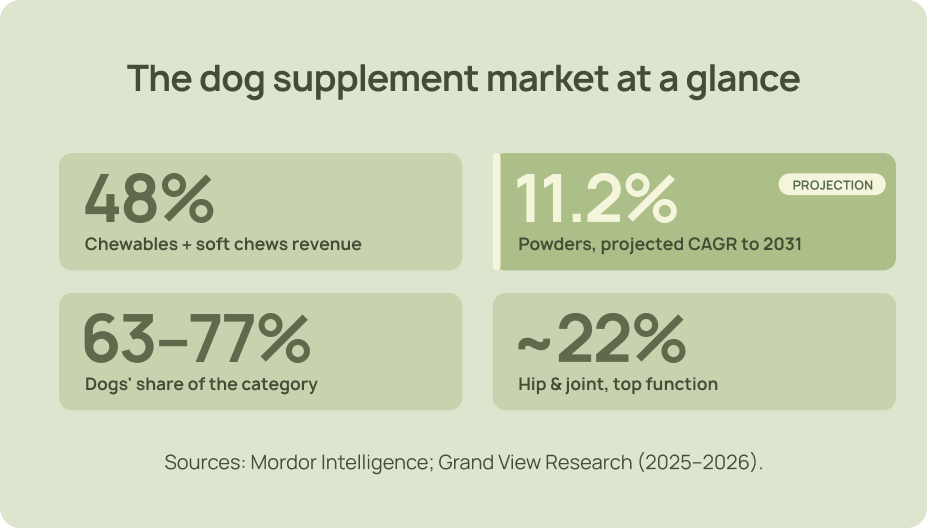
The dog supplement category rewards formats that slot into daily life. In Mordor Intelligence’s 2025 dataset, chewable supplements and soft chews together accounted for 48% of market revenue, while powders were projected to grow at an 11.2% CAGR through 2031. Dogs are the dominant audience, landing somewhere between roughly two-thirds and three-quarters of the category depending on how each firm defines and measures it, and hip-and-joint support reads as the largest single function segment. The exact figures shift with methodology and geography, but the shape holds: chewables lead today, powders are the growth story, and dogs are where the volume sits.
Get the format right and a formula becomes a daily habit. Get it wrong and even a strong formula gets left in the cupboard after week one. If you’re weighing a first product or a new SKU, it pays to think about format alongside a pet supplement manufacturer early, before the recipe is locked.
Soft chews — the compliance workhorse
Soft chews win on the one thing that decides whether a supplement works in the real world: the dog eats it. A bacon- or peanut-butter-flavored chew reads as a reward, not medicine, so owners skip the pilling battle and dosing stays consistent day after day. Chews come pre-dosed, travel well, and photograph like a premium treat, which helps explain their leading share of category revenue.
The tradeoffs live in the formula and the factory. A chew is a food product first, so it needs binders, humectants, and flavor systems to hold its shape and taste right. Those carriers take up room that could otherwise hold active ingredient, which is why a chew usually delivers less active per gram than a powder. Heat is the other constraint: traditional extrusion can run hot enough to knock down heat-sensitive actives. Probiotics are a common formulation concern because heat, moisture, oxygen exposure, and storage conditions can all reduce live-culture viability. Water activity also governs shelf life and the risk of mold or yeast when it isn’t controlled tightly.
Good chew manufacturing answers those constraints head on. Processing conditions designed to limit heat exposure can reduce thermal stress, but probiotic viability still has to be proven through strain-specific stability testing and verified through the end of shelf life. Careful water-activity control protects that shelf life, and a real flavor system earns palatability without drowning the formula in filler. If your product leans on probiotics or other heat-sensitive ingredients, the manufacturing method matters as much as the recipe itself.

Powders — density and formulation freedom
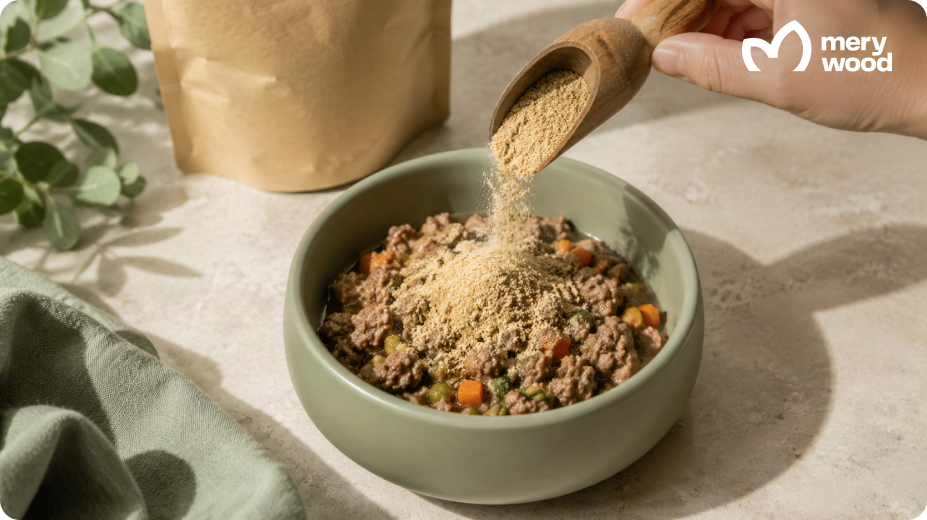
Powders flip the chew’s biggest weakness into a strength. With no shape to hold and no texture to build, a powder can devote a much larger share of the serving to the active itself, while a chew also has to carry the structural and palatability system needed to form a stable, acceptable piece. That headroom is why powders suit high-dose actives, whole-food bases, and multi-ingredient stacks that would bloat a chew past the point a dog wants to eat it.
Powders are also the most flexible format to build a line around. Serving size scales by the scoop, so one base formula can cover a Chihuahua and a Great Dane. Reformulating is simpler because you’re not re-tuning a texture every time you adjust the actives. And powders ride the food-topper trend, mixing into wet food or broth as part of a daily routine. The catch is administration and consistency: the owner has to measure unless you move to single-serve sachets, scooped doses get less precise for very small dogs, and a powder only works if it stays dry, disperses well, and tastes good enough that the dog finishes the bowl. Collagen and joint blends are strong powder candidates for exactly these reasons.
Liquids and oils — easy administration for add-to-food routines
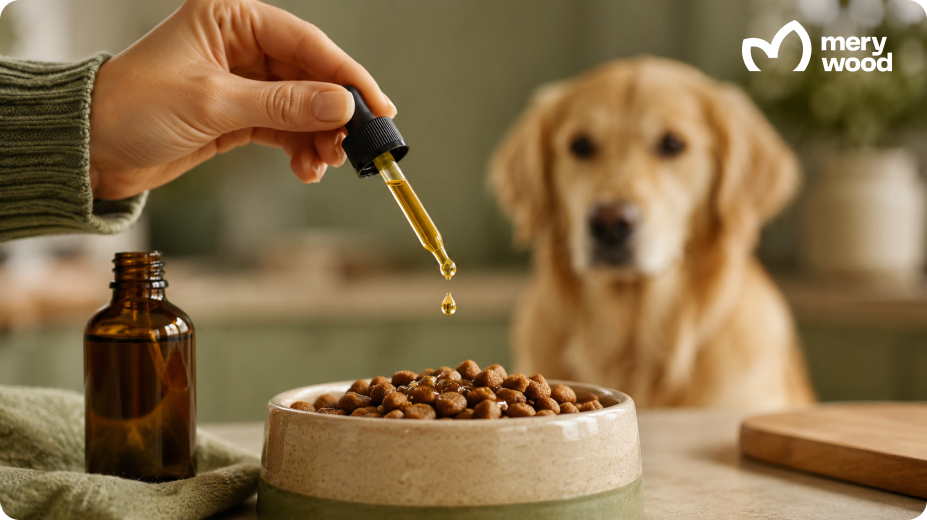
Liquids earn their place on administration. They mix straight into food, which helps with the dogs that spit out chews or eat around pills, and a dropper or pump turns dosing into a quick daily ritual. A liquid can also remove the dissolution step for an ingredient that is already in solution, which may support faster uptake in some formulations — but that doesn’t make liquids universally more bioavailable. Absorption still depends on the active, the carrier system, the dose, feeding conditions, and the individual dog. Mixing the dose into food simplifies administration, though intake still depends on the dog finishing the meal, and a strong-smelling oil can cut the other way and put a dog off its bowl.
Liquids shine for a specific kind of ingredient. Omega-3 and fish oil are the obvious fit, since oils are naturally liquid and a dropper or pump doubles as an easy add-to-food ritual. Broth-style liquid toppers are also emerging as an add-to-food format. The constraints split by base. Water-based liquids may need an antimicrobial preservative system or a validated self-preserving formulation. Oil-based products face a different challenge — oxidation — which calls for suitable antioxidants, oxygen- and light-protective packaging, and careful in-use shelf-life testing. Dosing accuracy is the shared caveat, since drops and pumps are less precise than a pre-weighed chew. How fish oil is made gets into why oxidation control starts at the raw-material stage, not just the bottle.
The three formats, side by side
A relative guide to how much of each serving can go to actives: powders typically offer the greatest potential active load, chews the least. Not exact proportions.
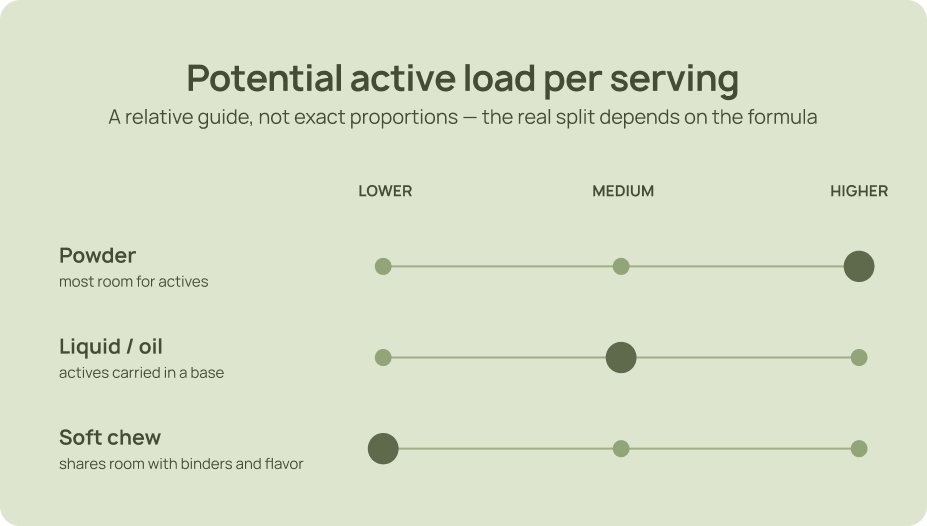
Table 1 — Soft chews vs. powders vs. liquids, from a manufacturer's chair
What about tablets and capsules? They round out the format menu, often offering strong dosing precision and favorable manufacturing economics, but they’re the hardest to get a dog to take voluntarily, which is why they’ve ceded ground to chews in the consumer market. They still earn their place in clinical or vet-channel products where exact dosing beats palatability.
What the format does to your margin and roadmap
Format choice ripples through the whole P&L. Chews carry a higher per-unit cost from flavor systems, moisture control, and shape tooling, but they may support premium pricing and repeat purchase when palatability, convenience, and perceived value are strong. Powders often keep cost of goods lower and make bundling easy, though the packaging (resealable pouch, scoop, or sachets) and the how-to-use education carry more weight with the customer. Liquids need protective packaging and tighter stability testing, which adds cost, but they suit the daily add-to-food habit that many subscription products are built around.
The format also sets how fast you can launch and how you scale later. A white-label chew or oil lets you test demand with minimal R&D, while a custom powder stack can create stronger formula differentiation than an off-the-shelf concept. Most durable pet brands start narrow with one format and one strong category, then add SKUs as real sales data comes in rather than guessing at the range on day one.
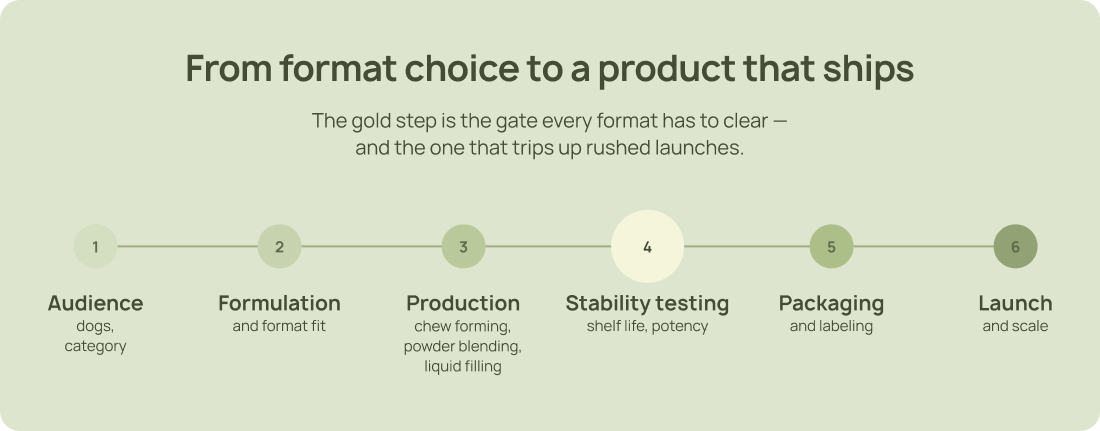
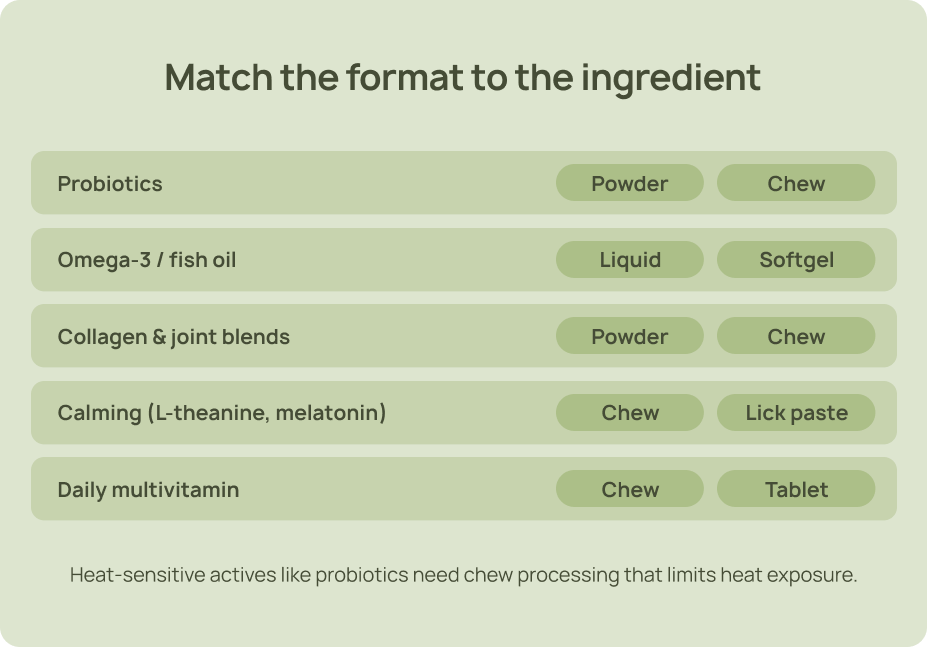
Table 2 — Quick reference: common ingredients and where they belong
How Merywood approaches format
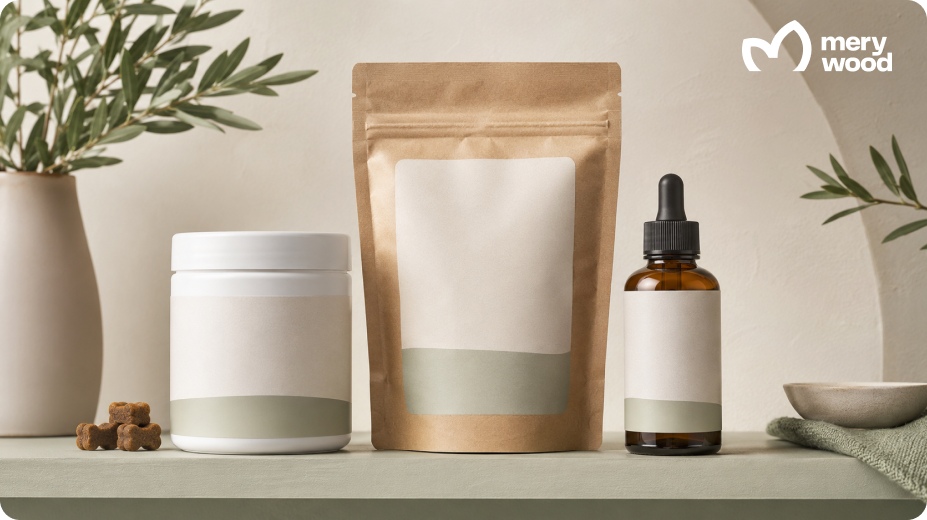
Merywood treats format as the first real product decision, not an afterthought. As an EU contract, private-label, and white-label manufacturer for dog and cat supplements, Merywood builds across soft chews and lick pastes, powders, capsules and tablets, and liquids and oils. The starting point is always matching the format to the ingredient, the margin model, and the customer’s daily routine.
That means the awkward questions get asked before an order is placed: will this active survive a chew or does it belong in a powder, does this water-based liquid need a preservative system, does this oil need oxidation-protective packaging, and is the dose realistic for a picky dog. Merywood’s line runs on a simple principle — pet supplements are not human formulas in a smaller dose — so palatability, format fit, and repeatable batches sit at the center of development, backed by ISO, GMP, and HACCP standards.
There are three ways in, depending on how fast you want to move:
- White label for a quick market test: proven concepts, your branding, minimal R&D.
- Private-label custom formulation to build something differentiated around your goals and category.
- Contract manufacturing when you already have a formula and need stable, documented production at scale.
Formulation, format strategy, packaging, labeling, and compliance all run in one place. If you’re weighing formats for a dog supplement line, that’s the conversation to open with a pet supplement manufacturer.
Building a dog supplement line?
Tell Merywood your category, target format, and market, and the team will recommend the route that fits: white label, private label, or contract manufacturing.
Frequently asked questions
Which supplement format is best for dogs?
There isn’t one. The best format depends on the ingredient, the price point, and the dog. Soft chews win on palatability and daily compliance, powders hold more active per serving and flex across dog sizes, and liquids are easy to mix into food for dogs that refuse chews or pills. Match the format to what you’re actually trying to deliver.
Are soft chews less potent than powders?
Usually less dense, not less effective. A chew spends some of its weight on binders, humectants, and flavor, so it holds less active per gram than a powder. A well-designed chew still delivers a full dose when the serving is sized for it and the dog eats the whole piece.
Do soft chews damage probiotics or other heat-sensitive ingredients?
They can, if the chew is made with hot extrusion. Heat, moisture, oxygen, and storage conditions can all reduce live-culture counts. Processing conditions that limit heat exposure can reduce thermal stress, but viability still has to be proven with strain-specific stability testing through the end of shelf life. For very sensitive strains, a powder or capsule can be the safer home.
What format is best for omega-3 or fish oil?
A liquid oil or a softgel. Oils are naturally liquid and easy to add to food. The real work is protecting them from oxidation, with antioxidants and oxygen- and light-protective packaging, so the fatty acids stay intact through the product’s in-use life.
Which format is the most cost-effective to manufacture?
Powders and tablets usually carry the lowest cost of goods, because they skip the flavor systems, moisture control, and shape tooling a chew needs. Chews cost more to make but may support premium pricing and repeat purchase when palatability, convenience, and perceived value are strong, so the cheapest format to produce isn’t always the most profitable to sell.
Which format has the best repeat-purchase rate?
No format guarantees it. Repeat purchase comes from a combination of acceptability, noticeable value, convenience, price, how long a pack lasts, and product quality, with format as one lever among several. What formats like chews and add-to-food liquids do well is remove friction from daily use, and the dose a dog reliably takes beats a more potent one it refuses.
Which formats does Merywood manufacture for dog supplements?
Merywood produces dog and cat supplements as soft chews and lick pastes, powders, capsules and tablets, and liquids and oils, all under EU-quality standards. The right format is chosen against your category, margin model, and the customer’s routine.
Can Merywood help me choose the right format for my ingredient?
Yes. Format strategy and formulation feasibility come before production, so questions like whether an active survives a chew, how to protect an oil, and whether a dose is realistic get answered up front rather than after a batch runs.
What’s the difference between white label, private label, and contract manufacturing at Merywood?
White label is the fastest route: adapt a proven concept with your branding and minimal R&D. Private label builds a custom formula around your brand for real differentiation. Contract manufacturing produces to a formula you already own, with documented, repeatable batches at scale.
How do I start a dog supplement line with Merywood, and what are the minimum orders?
Share your category, target format, and market, and Merywood will recommend the best route. White-label programs start from around 2,500 units, and private-label custom formulas from around 5,000 units, so a first launch stays close to a realistic budget.
Sources
Market figures are estimates that vary by firm, market definition, and geography — cited here as directional, not exact.
- Mordor Intelligence — Pet Dietary Supplements Market (2026–2031): chewables and soft chews ≈48% of 2025 revenue, powders ≈11.2% projected CAGR through 2031, and dogs ≈77% of the category.
- Grand View Research — Pet Supplements Market: dogs ≈63.1% of the category and hip & joint ≈21.6% of applications (2025). A separate Mordor read puts hip & joint nearer 28%, which is why the figure is attributed to its source.