

How to Start Your Own Supplement Company in Europe: A 2026 Step-by-Step Guide



How to Start Your Own Supplement Company in Europe: A 2026 Step-by-Step Guide


The European supplement market has grown up. People aren’t asking whether to take supplements anymore — they’re asking which brand is clean, honest, and made close to home. For new founders, that’s a real opening. The catch: launching a supplement brand in Europe in 2026 is harder than it looks. The brands that win don’t wing it. They pick a serious manufacturer early and treat compliance as a feature, not a tax.
This guide walks the whole path: niche, production model, real budget, EU regulations, ingredients, packaging, marketing.
Not medical advice. This article explains how to start a dietary supplement company in Europe for educational and informational purposes only. It does not describe how to use any supplement, and it is not medical, clinical, legal, or regulatory advice. Talk to a qualified healthcare professional before using any supplement, and consult qualified legal and regulatory advisors, along with the applicable regulations in your market, before manufacturing or selling one.
Why Now Is the Right Time to Launch a Supplement Brand
Grand View Research puts the global dietary supplements market at USD 209.52 billion in 2025, headed for USD 393.56 billion by 2033 (CAGR 8.1%, 2026–2033). Contract manufacturing is on a steeper curve: USD 121.2 billion by 2030. Translation: more brands are launching without owning a factory.
Three forces are shaping European demand:
- Older consumers buying immune support, joint mobility, and vitamin D for bones
- Younger, health-conscious consumers picking personalized nutrition, gut-health supplements, plant-based products, and protein supplements
- “Made in EU” preference across both groups, with provenance mattering more since the post-pandemic clean-label wave
Clean labels, third-party testing, and transparent sourcing give new brands a stronger position than generic, price-only offerings. The supplement industry is rewarding brands that look serious from the shelf.
 Key Point: Growth doesn’t reward everyone equally. The supplement companies gaining share share three habits: they pick a defensible niche, partner with a reputable supplement manufacturer, and treat regulatory compliance as a marketing asset rather than a chore.
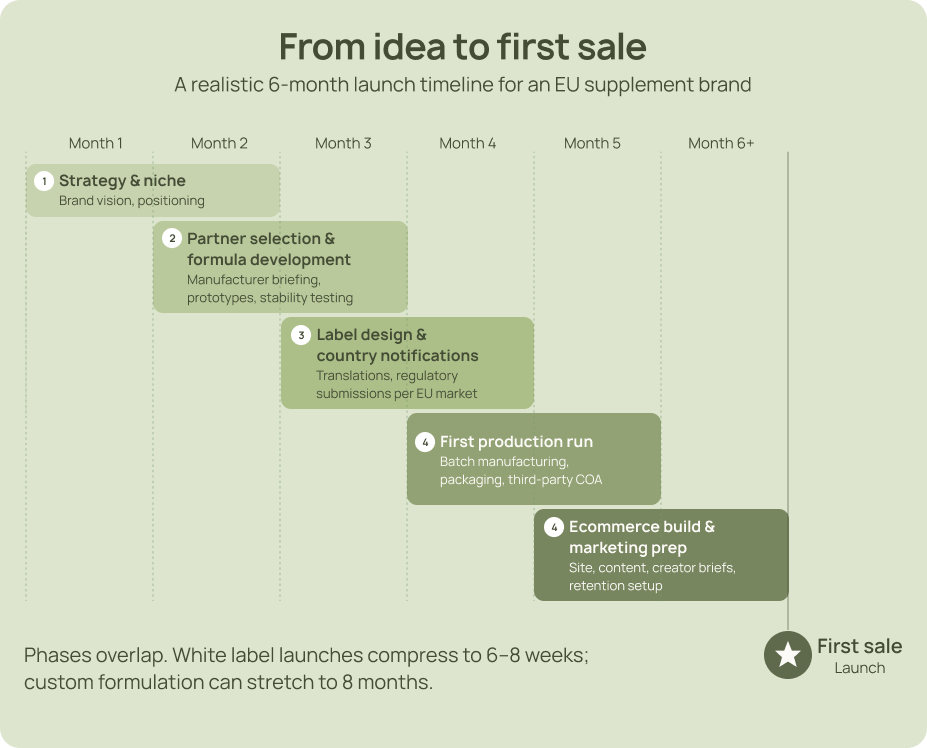
Step 1: Define Your Niche and Brand Vision
Before you call a supplement manufacturer, get clear on who you’re selling supplements to and why they should buy from you instead of someone else.
“Vitamins for women” isn’t a niche. It’s a shelf section. A real niche sounds more like “iron and B-vitamin supplements for vegan women aged 25–40” or “evening magnesium supplements for shift workers.” Specific consumer, easier downstream decisions: ingredients, packaging, channels, MOQs. Same logic applies if you want to create your own vitamin line. Pick one or two vitamins your target audience already buys repeatedly. Don’t try to build a full catalogue before you’ve proven demand.

Where consumer demand for supplements is rising in Europe right now:
- Sports nutrition and protein supplements
- Gut health (probiotics, fiber, digestive enzymes)
- Women’s hormonal health
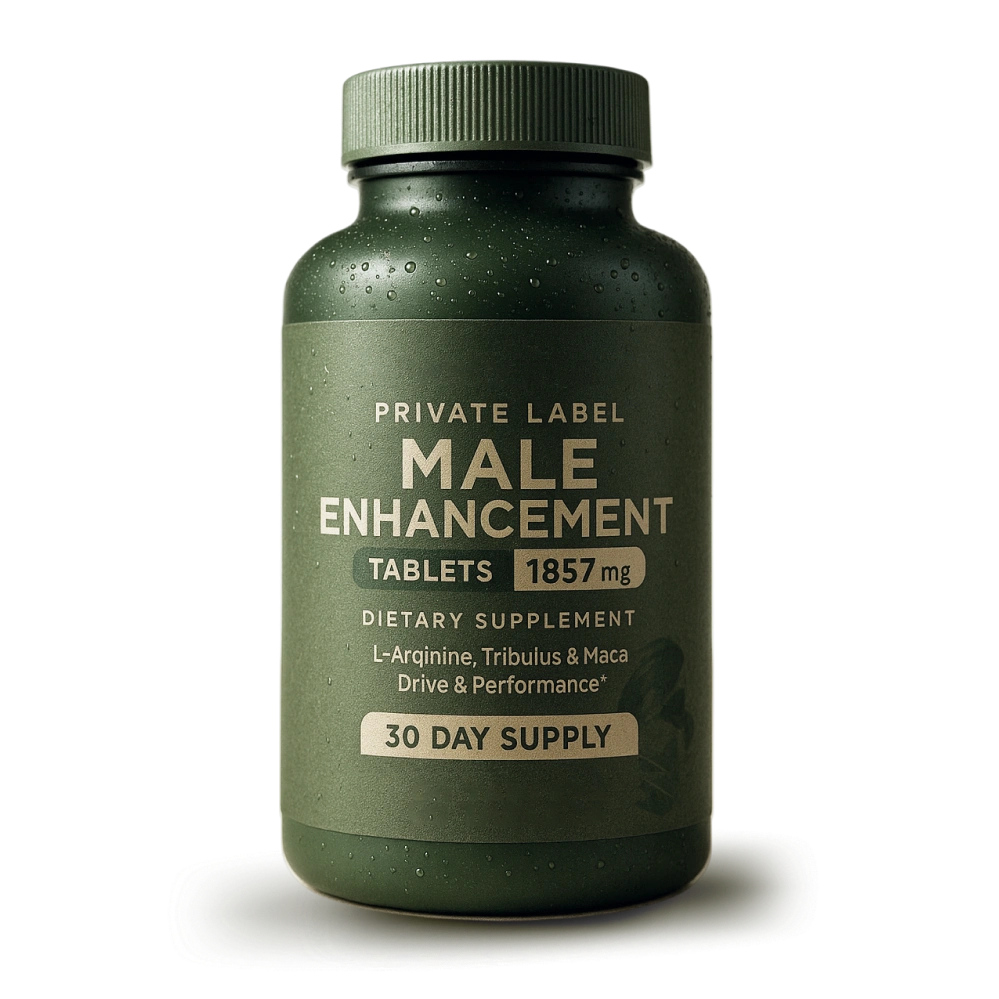
- Men’s vitality
- Infant supplements, one of the fastest-growing end-use segments, projected at 12.4% CAGR through 2033
- Prenatal and maternal wellness supplements
- Pet supplements
Inside each, find a sub-segment underserved by existing supplement companies. Brands that succeed in this supplement business niche launch with 1–3 SKUs.
A brand identity that lands in Berlin can fall flat in Madrid. Successful EU supplement brands either go deep in one or two markets, or design from the start for cross-border ecommerce: multilingual labels, a name that doesn’t trip on existing trademarks, marketing strategies tuned to local search behavior.

Our advice: Spend more time on positioning than on the logo. A clear brand vision — what you create, who it’s for, why it’s different — outlasts every design refresh and grounds your marketing strategies long term.
Step 2: Pick the Right Production Model
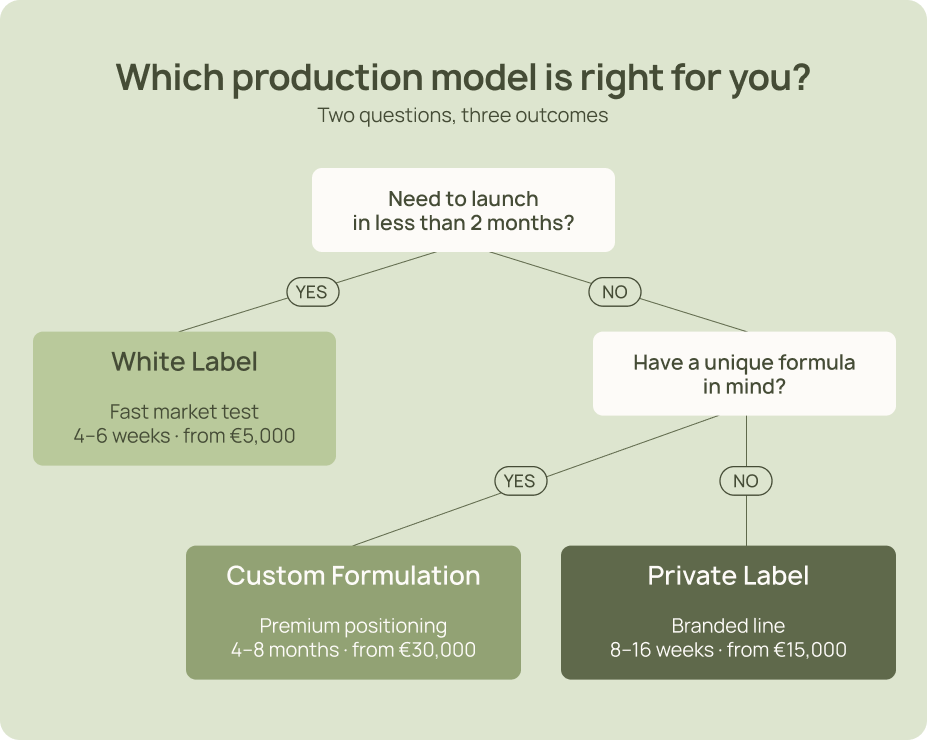
Three production routes dominate the supplement industry: white label, private label, and custom (contract) formulation. Your chosen model dictates startup costs, speed to market, and how differentiated your supplements feel. The right answer to how to start your own supplement business often comes down to this single choice.
White Label Supplements
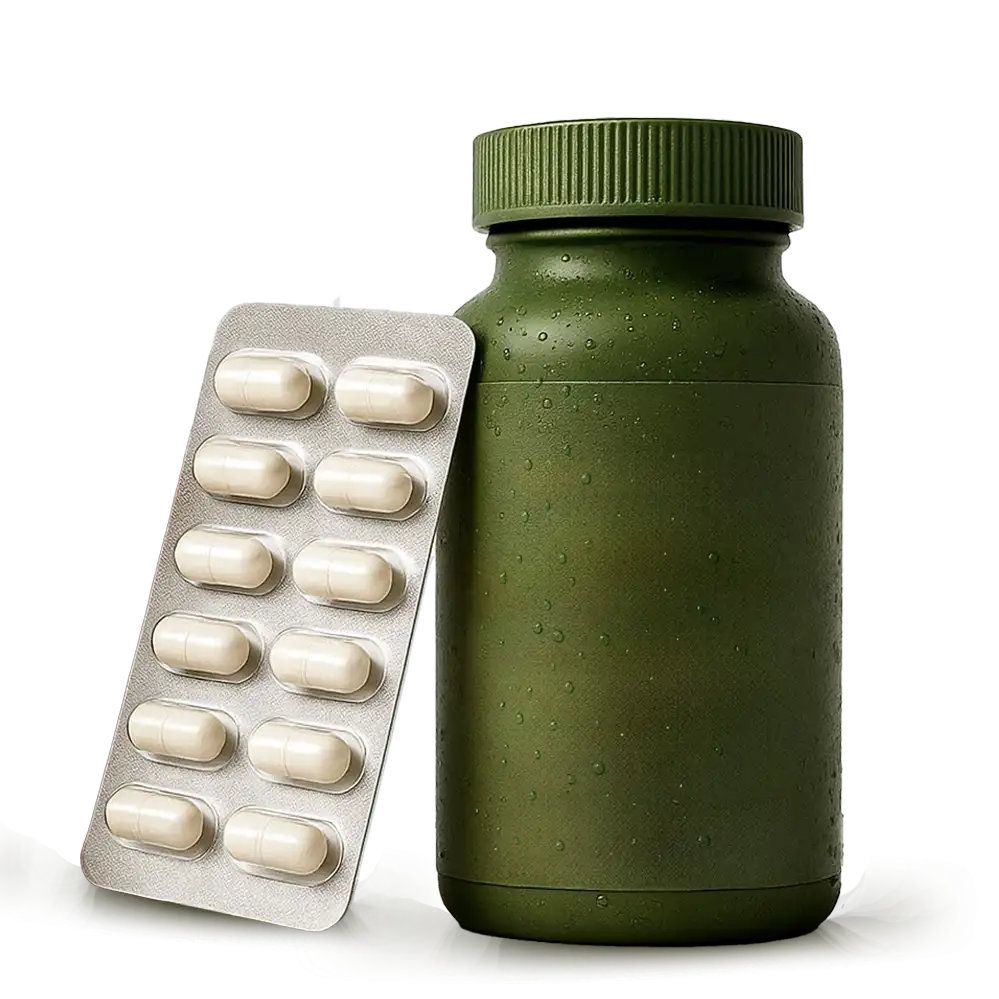
White label supplements are pre-formulated products you brand and sell as your own. The manufacturer’s catalogue handles formulation; you pick the SKU, packaging, and label design. MOQs stay manageable: Merywood produces from 2,500 units for white label and 5,000 for private label. White label supplements are how many ecommerce brands test market demand before committing to custom formulas.
Private Label Supplements
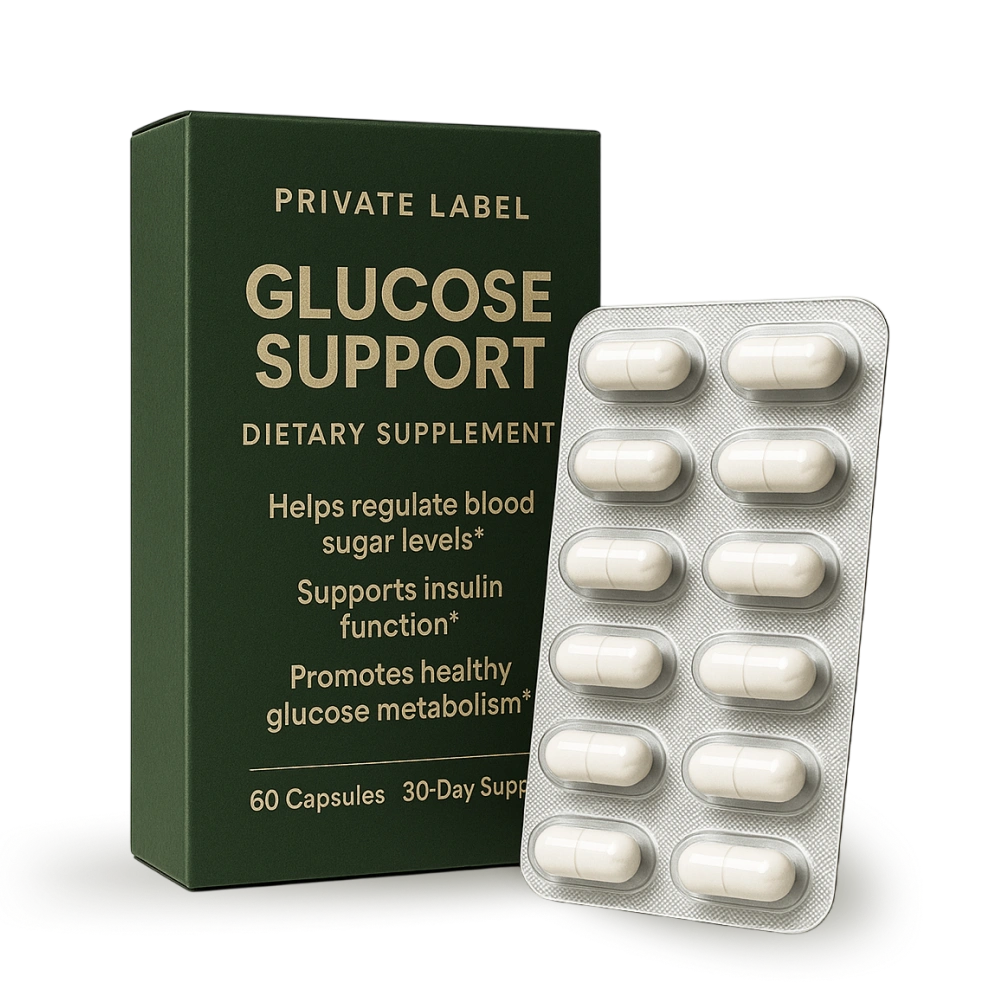
Private label supplements sit between white label and full custom. You work with ready-made formulas the manufacturer adjusts for your brand: dosage, format, packaging. Most private label supplement brands launch with two or three SKUs to give themselves room to cross-sell. A private label supplement strategy lets you test demand on a tighter timeline than custom work, and many founders create their own supplement brand using a private label supplement mix alongside one custom hero product.
Custom Formulation
Custom formulation through contract manufacturing of supplements lets you create unique products from the ingredients up. Complete control over the recipe, premium pricing, and a real moat against copycats. The trade-offs: longer development cycles (4–8 months), higher startup outlay, and larger MOQs.
This is the route most brands take when the formula itself is the differentiation. Three questions decide between custom formulation and ready-made formulas: how fast you need to launch, how much capital you have, how distinct the product needs to be. White label and private label suit founders testing demand. Custom formulation pays off when your own supplement brand is built around a recipe nobody else can match.
Manufacturer Insight: Ask a supplement manufacturer to map all three routes (white label, private label, custom) against your target markets, launch date, MOQ, label requirements, and country notification needs. The answer often tells you whether you really need a fast market test or a more differentiated product. At Merywood, this is usually the first conversation founders have before committing to a model.
Step 3: Understand Startup Costs and Profit Margins
This is where most new supplement brands underestimate the work.
A supplement business in Europe typically launches on €5,000 (minimum-viable white label) and scales up to €50,000+ for a custom formulation supplement line of high-quality vitamins or specialty supplements. Big variables: minimum order quantities, format complexity, packaging, regulatory documentation.

A realistic cost breakdown for an MVP launch in 2026
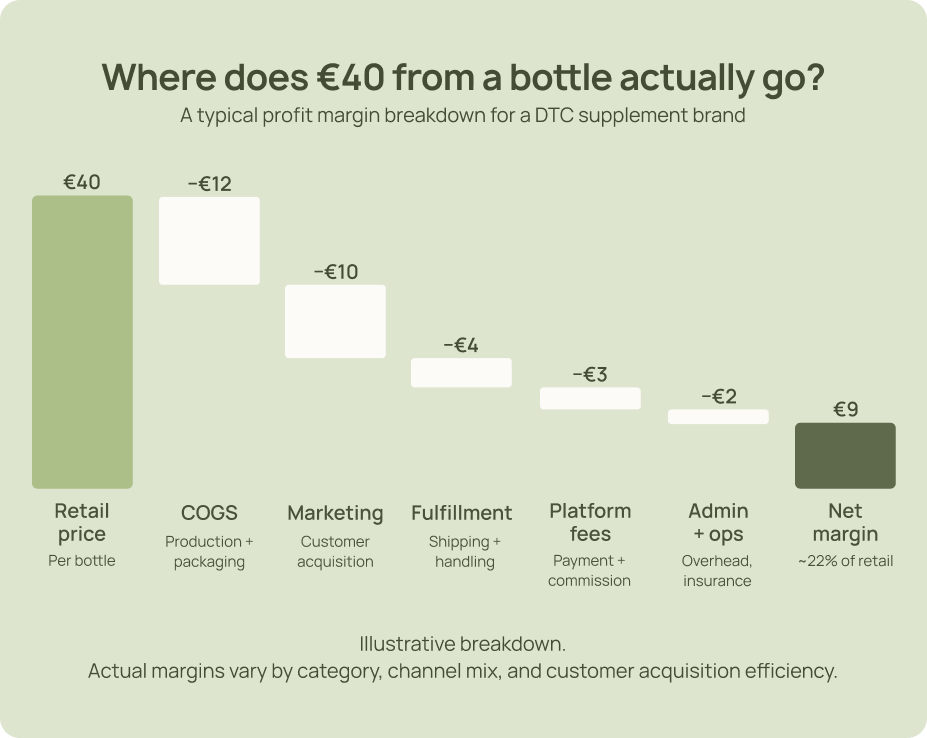
Profit margins in the supplement industry look attractive on paper. Many supplement companies post gross margins of 30–50%, with protein supplements and other high-volume dietary supplements often near the top. Net margins are a different story — they live or die on customer acquisition cost. Pay €30 to acquire a customer who buys a €40 bottle once, and the math doesn’t work. Repeat purchase from loyal customers is the model. Everything else flows from that.
The single line item that swings the budget hardest is the production run, and the production run is governed by MOQ. There’s a separate piece on what affects MOQ in supplement manufacturing — worth reading before you commit to a manufacturer.
Step 4: Navigate EU Regulatory Compliance
This is the section most “how to start your own supplement brand” guides skip. EU rules are strict, country-level details vary, and getting it right protects your brand from costly recalls.
Directive 2002/46/EC and Labeling Rules
Dietary supplements are regulated as foods in the EU, primarily under Directive 2002/46/EC. The directive lists the vitamins and minerals authorized for use (Annex I) and their permitted forms (Annex II). If a vitamin or mineral source isn’t on those lists, it can’t legally be used in supplements sold in the EU. Other ingredients — botanicals, amino acids, novel foods — fall under separate rules.
Labels must comply with Regulation (EU) No 1169/2011. Required elements:
- The designation “food supplement”
- Nutrients and amounts per recommended daily portion
- A warning not to exceed the stated dose
- A statement that supplements shouldn’t replace a varied diet
- “Keep out of reach of children”
- Batch number and expiry date
- Allergen declarations
- Manufacturer or distributor contact details
One thing US founders often miss: the Supplement Facts panel format used in the United States doesn’t apply in the EU — the structure is different. Regulation (EU) 2023/915 covers contaminant limits.
Health Claims and Country Notifications
Nutrition and health claims fall under Regulation (EC) No 1924/2006. Only claims authorized in the EU Register on Health Claims can appear on packaging — and even authorized claims have to follow specific wording. “Supports normal immune function” framed around an authorized vitamin C claim works. “Boosts immunity” doesn’t.
Each EU member state runs its own notification process. Many require pre-market notification with documentation; others use self-declaration. Most ecommerce brands targeting multiple EU markets handle notifications country-by-country with the manufacturer’s regulatory team. Skipping this step is one of the most common legal issues new brands run into.
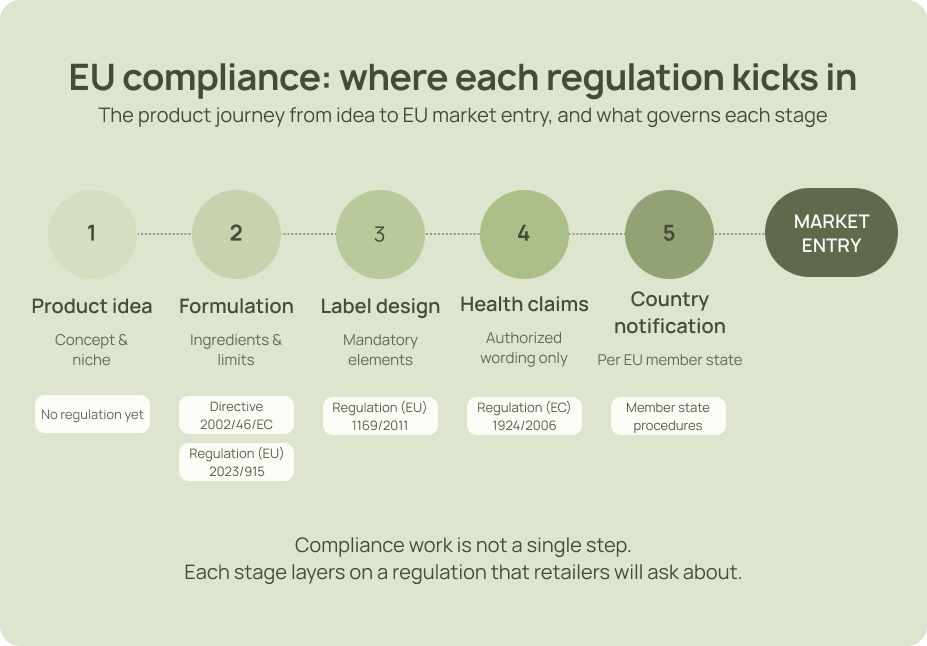
Insight: Compliance work isn’t just defensive. A clean documentation pack — ingredient specifications, certificates of analysis, stability testing, country notifications — is exactly what major EU retailers and ecommerce platforms ask to see before they list a brand.
Step 5: Source Quality Ingredients and a Reputable Manufacturer
The quality of ingredients defines whether your brand earns repeat customers or one-time buyers. Partnering with a reputable supplement manufacturer pays for itself.
In Europe, supplement manufacturing sits under HACCP, Regulation (EC) No 852/2004 on food hygiene, and ISO standards like ISO 22000 or FSSC 22000. Many quality manufacturers also apply GMP principles to supplement manufacturing voluntarily, even though pharmaceutical-grade GMP isn’t legally required for food supplements. Suppliers that adhere to GFSI-recognized schemes (BRC, IFS, FSSC 22000) signal a higher safety baseline. Asking whether you need a GMP-certified manufacturer is worth doing early — retailers in the supplements industry often expect it even when the law doesn’t.
Certified raw materials matter for positioning: organic, non-GMO, gluten-free, vegan, halal, and kosher all expand your addressable market. Health-conscious consumers of supplements often check for these on the label before they check the cost. Third-party testing — a finished-product certificate of analysis from an independent lab — is one of the most cost-effective credibility signals you can buy.
What a reputable manufacturer of supplements should bring to the table:
- EU-certified facilities (HACCP, ISO 22000 or FSSC 22000, ideally GMP)
- Transparent third-party testing with finished-product certificates of analysis
- Realistic minimum order quantities for a new brand
- Regulatory guidance, including country-by-country notifications
- The ability to scale from launch volumes to 10× without changing partners
- Documented purity, potency, and batch consistency over time
Merywood, for example, manufactures private label products and white label supplements in HACCP-certified EU facilities and supports country-by-country product notification or registration where required.

Step 6: Plan Packaging, Logistics, and Launch Channels
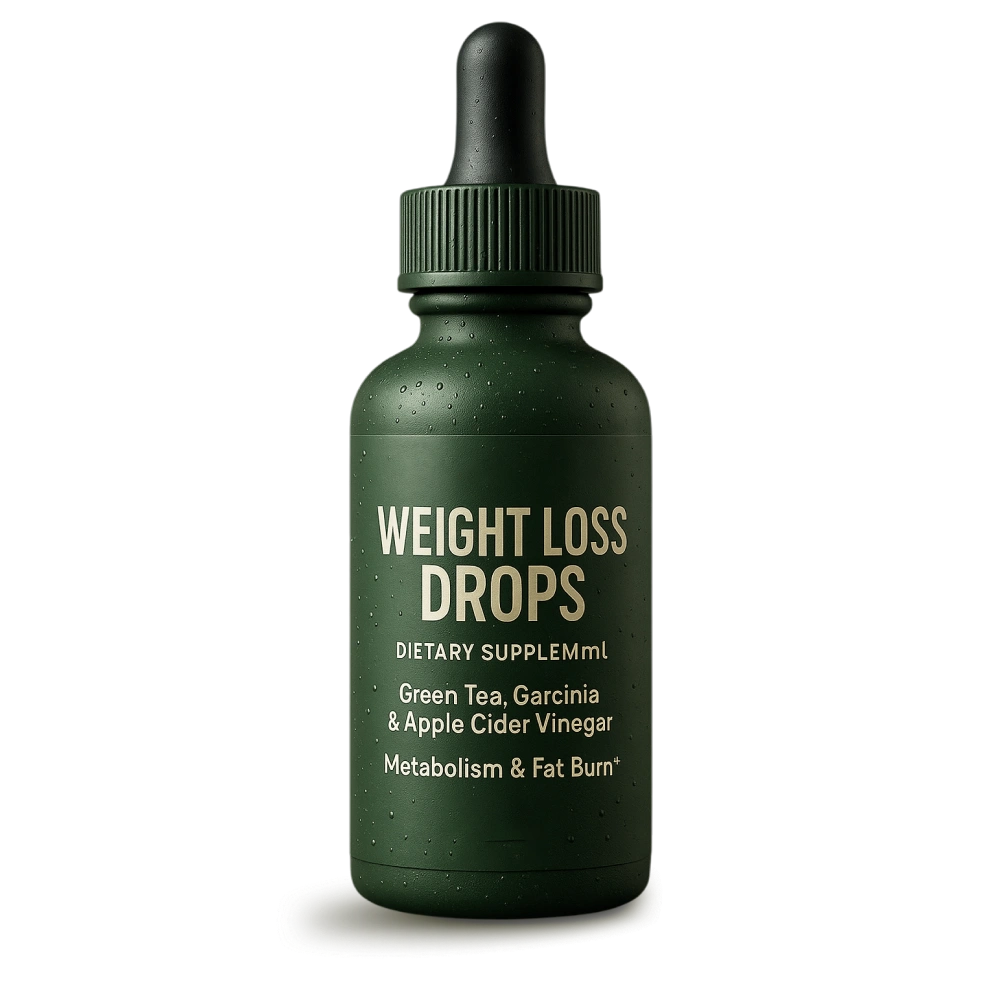
Capsules, tablets, powders, effervescents, sachets, and drops each carry different cost, stability, and customer-experience implications. Capsules and tablets are the most economical and shelf-stable. Powders work for protein supplements and amino acids. Drops and effervescents feel premium but cost more.
Ecommerce is the fastest-growing channel for selling supplements, with online sales projected to keep climbing through 2027. Offline channels — pharmacies, health stores, supermarkets — still hold the majority of global supplement revenue. For most new brands, ecommerce is the right beachhead: lower entry barriers, direct relationships with customers, faster feedback loops than retail.
Once you scale across multiple EU countries, logistics becomes the bottleneck fast. Reliable fulfillment partners, multi-warehouse inventory management, and cash-on-delivery capability where customers expect it — these aren’t optional once you ship at volume. We’ve covered the picks in detail in our roundup of the best fulfillment companies for supplements in 2026.

Step 7: Build Marketing That Earns Trust
Marketing strategies for supplement brands sit on a different ethical floor than apparel. Misleading claims trigger regulatory action, advertising bans on Meta and Google, and platform delistings — and once an ad account is restricted in this category, recovery is slow.
What’s working in 2026:
- Education-led content on gut health, immune support, and women’s hormonal cycles
- Creator partnerships with credentialed voices — registered nutritionists, sport coaches
- Email and SMS retention programs with proper consent management
- Search-led organic content that creates trust with potential consumers of supplements over time
Increasing health awareness among European consumers means they research before they buy. Your content has to meet that research moment with substance, not slogans.
Packaging is itself a marketing channel. A clean, honest label with clear dosage, full ingredient list, and visible certifications converts hesitant buyers more reliably than aggressive claims.

Common Mistakes New Supplement Brands Make
- Budgeting only for manufacturing — and forgetting label translations, country notifications, insurance, photography, ecommerce setup, and marketing
- Choosing a manufacturer based only on unit price, without checking lead times, MOQ flexibility, and documentation
- Picking a niche too broad to compete in
- Launching multiple supplements at once instead of one strong SKU with clear positioning
- Using health claims that aren’t authorized in the EU Register
- Skipping third-party testing — until a failed batch forces a recall
- Treating compliance as a final step instead of building it into the product from the start
Each of these is recoverable. Most are far cheaper to avoid up front than to fix later — especially in an industry where consumer trust takes years to create and weeks to lose.
Bringing It All Together
Launching a supplement brand in Europe in 2026 is one of the more rewarding plays in consumer goods — the market is growing, EU “made-in” provenance is a real moat, and ecommerce has shortened the path to first revenue. It is also one of the more unforgiving plays. Compliance is strict, retailers expect proper documentation, and the brands that win are the ones that get the production model, manufacturer choice, and regulatory work right from the first SKU.
The single most important decision a founder makes is the manufacturer they partner with. The right partner shortens timelines, supplies the documentation retailers ask for, advises on country notifications, and scales with the brand from launch run to ten times that volume. The wrong partner costs months and rarely shows up on a budget sheet until it’s too late.
Merywood works with founders launching new EU supplement brands every week — across white label, private label, and custom formulation, in HACCP-certified facilities, with regulatory and country-notification support built in. If you are at the planning stage, the fastest way to pressure-test your concept is to walk through it with a manufacturer who has seen the same launch a hundred times.
Ready to start?
Tell Merywood about your product — share your product idea, target volume, and target markets, and the team will come back with a realistic plan, MOQ, and timeline within a few business days.
Frequently Asked Questions
What is the difference between white label and private label supplements?
White label supplements are pre-formulated SKUs from a manufacturer’s catalogue you brand and sell as your own — fast, low-risk, low-MOQ. Private label means working with ready-made formulas adjusted for your brand. Both are faster than custom formulation and need a much lower upfront investment.
Which EU regulation governs dietary supplements?
Directive 2002/46/EC is the primary regulation, supported by Regulation (EU) 1169/2011 for labeling, Regulation (EC) 1924/2006 for nutrition and health claims, and Regulation (EU) 2023/915 for contaminant limits. Member states have their own notification requirements that vary country by country.
What are typical profit margins in the supplement industry?
Gross margins for supplement companies often fall in the 30–50% range, with protein supplements and high-volume formats near the top. Net margins depend on customer acquisition and repeat purchase rates.
Can I sell the same supplement in every EU country?
Not automatically. The EU framework is harmonized at the directive level, but member states require separate notifications and have varying rules on permitted ingredients and claim wording.
Do I need product liability insurance for a supplement brand?
Yes — most EU retailers and ecommerce platforms require proof of coverage before they list you. Annual premiums for €1 million coverage range from €1,500 to €5,000.
Can I start a supplement brand without my own factory?
Yes. Most new EU supplement brands launch through white label, private label, or custom formulation with a contract manufacturer rather than building production in-house. Founders focus on brand and demand validation while the manufacturer handles production, quality systems, and country notification support.
How many SKUs should a new supplement brand launch with?
One to three. A single hero SKU lets you concentrate on marketing budget and learn what customers actually want. A two- or three-SKU supplement line works when you can group products into a clear bundle. Founders who want to create a serious brand don’t need a big catalogue at launch — ten products spreads inventory thin and makes it harder to read which formula drives repeat purchase.