
What Is Microbiome Skincare and Why It Is Redefining Cosmetic Manufacturing


What Is Microbiome Skincare and Why It Is Redefining Cosmetic Manufacturing


Microbiome Skincare as a Manufacturing-Led Skincare Revolution
The global beauty industry is entering a skincare revolution where microbiome skincare is no longer a conceptual trend but a production-driven reality. For cosmetic manufacturers and brand owners, understanding what is microbiome skincare is now a key part of building relevant, effective skincare portfolios.
At the center of this shift is the skin microbiome — a complex ecosystem living on the skin that directly influences skin health, skin barrier integrity, and long-term skin appearance. Supporting this ecosystem introduces a new dimension in how skincare products are formulated, tested, and positioned.
What Is Microbiome Skincare?
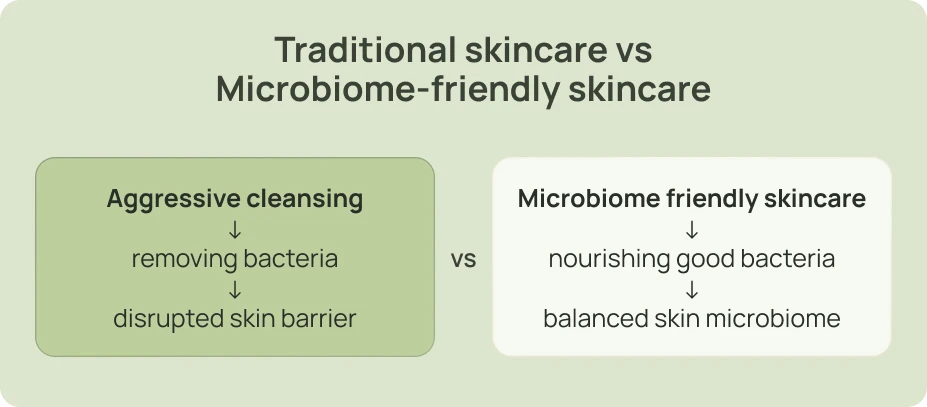
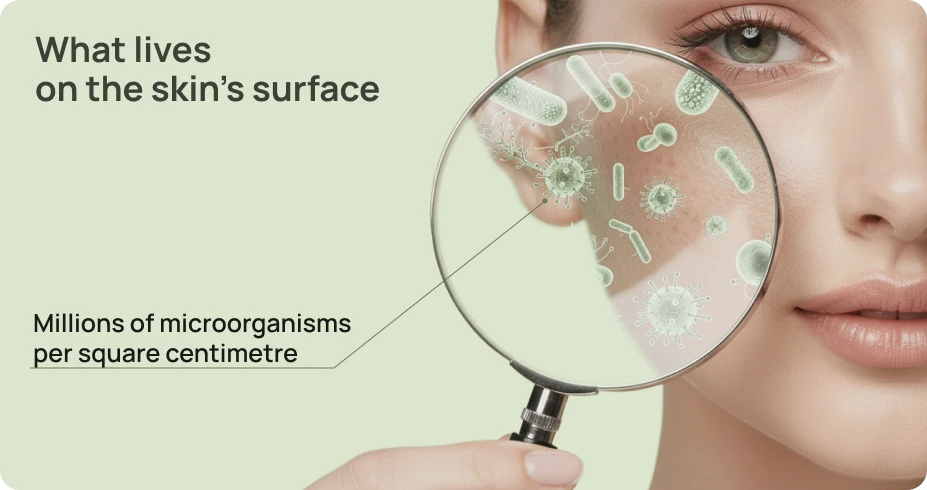
Microbiome skincare focuses on preserving and supporting the skin’s natural ecosystem rather than aggressively removing bacteria from the skin’s surface. The skin microbiome consists of millions of microorganisms living on every square centimetre of human skin, forming a dynamic and highly individual ecosystem.
This ecosystem includes bacteria, fungi, and viruses that coexist in a delicate balance.

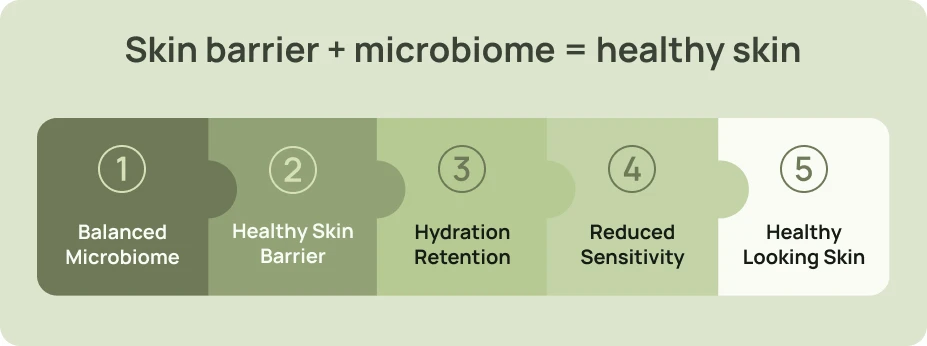
Key point: When supported correctly, a healthy microbiome strengthens the skin’s natural barrier, supports hydration, and contributes to overall skin health.
Understanding the Skin Microbiome as an Active System
The skin microbiome is not passive. It actively participates in immune signaling, inflammation control, and maintaining skin health. Good bacteria compete with harmful bacteria, helping prevent infections, reduce inflammation, redness, and breakouts.
A balanced skin microbiome helps the skin adapt to external factors such as pollution, climate, and lifestyle stress, promoting resilience and maintaining a healthy skin barrier over time.
Skin Barrier Function and Microbial Balance
A healthy skin microbiome is crucial for maintaining the skin’s barrier function. The skin barrier protects the skin from moisture loss, allergens, and environmental stressors.
When microbial balance is disrupted, the skin barrier weakens, leading to dry skin, sensitive skin, redness, and various skin conditions. Maintaining a healthy looking skin requires both structural barrier support and microbial balance.
Microorganisms on the Skin: Beyond Bacteria
The skin microbiome is composed of bacteria, fungi, and viruses that coexist on the skin’s surface. These microorganisms form a complex skin flora that interacts with the immune system and supports healthy skin.
Healthy microbial communities communicate with each other, helping regulate inflammation and support skin health. Removing bacteria indiscriminately disrupts this balance and may worsen various skin conditions.
Prebiotics, Probiotics, and Postbiotics in Skincare Manufacturing
Microbiome skincare ingredients typically fall into three categories.
Prebiotics
Prebiotics act as nourishment for good bacteria, helping them flourish. They are widely used due to their stability and compatibility with modern skincare formulations.
Probiotics
Probiotics are live microorganisms that can help restore microbial balance. Their use requires careful formulation, preservation strategies, and manufacturing expertise.
Postbiotics
Postbiotics provide direct barrier-strengthening and anti-inflammatory benefits. They are increasingly favored for delivering effective solutions without the challenges associated with live cultures.
Together, these components allow brands to create microbiome friendly skincare products with measurable skin health benefits.
pH Balance, Cleansing, and Microbiome Preservation
Beneficial microbes help regulate the skin’s pH, keeping it slightly acidic (approximately 4.5–5.5). This acidic environment is essential for maintaining a healthy skin barrier and controlling harmful bacteria.
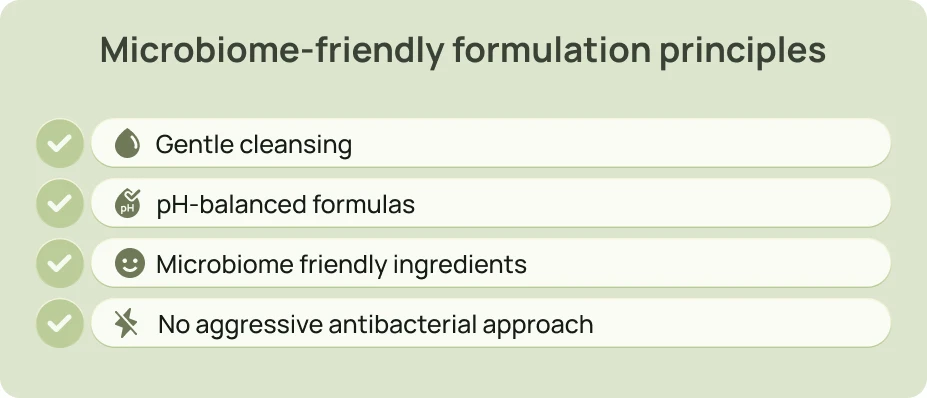
Gentle cleansers and pH-balanced skincare formulations support the skin microbiome without stripping beneficial skin flora or compromising the skin’s surface.
Microbiome Skincare Ingredients and Formulation Strategy
Microbiome skincare ingredients must be carefully formulated to support microbial balance while delivering visible benefits such as hydration, moisture retention, and improved skin appearance.
From a production standpoint, microbiome-friendly formulations often align with white label cosmetics strategies, allowing brands to launch scientifically grounded products efficiently while maintaining flexibility in branding and claims.
Addressing Skin Conditions Through Microbial Balance
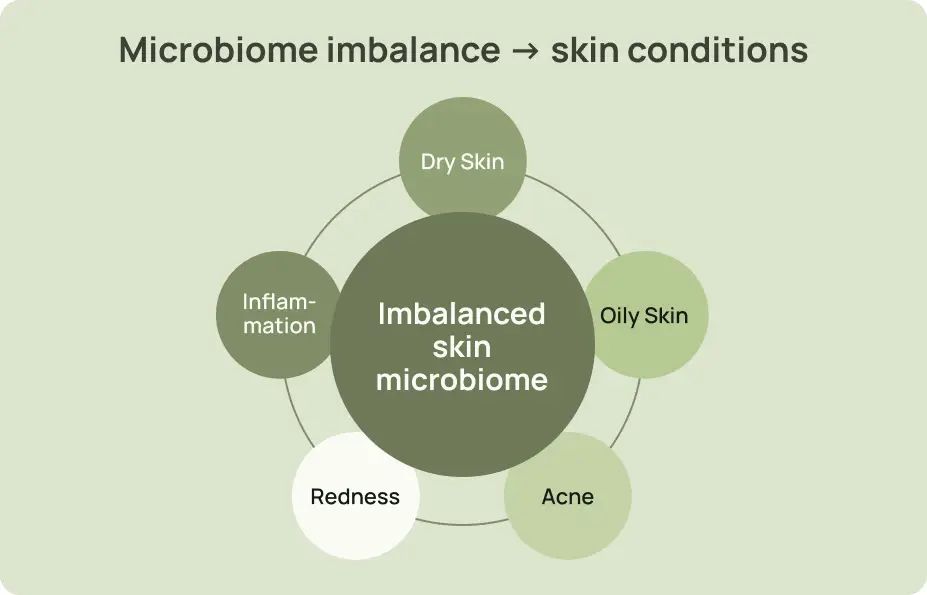
An imbalance in the skin microbiome can contribute to acne, dry skin, oily skin, inflammation, and redness. Microbiome skincare focuses on restoring balance rather than suppressing symptoms.
This approach allows brands to position microbiome skincare products as long-term solutions that support healthy skin and maintaining skin health across different skin types.
Why Sensitive Skin Is Driving Microbiome-Friendly Formulations
Sensitive skin has become one of the strongest drivers behind the microbiome skincare trend. In many cases, sensitivity is not caused by a single ingredient but by an imbalance in the skin microbiome.
Microbiome friendly skincare helps:
- Reduce inflammation and redness
- Improve tolerance in sensitive and normal skin
- Support the skin’s natural barrier

Our advice: For manufacturers, this creates opportunities to develop microbiome friendly products that address sensitive skin at the ecosystem level.
Microbiome Science and Industry Research
The growing body of microbiome science has shifted how skincare efficacy is evaluated in scientific circles. Research increasingly confirms that a healthy microbiome supports skin barrier function, immune responses, and overall skin health.
This scientific knowledge is now being translated into scalable skincare manufacturing and claim substantiation strategies.
From Research to Contract Manufacturing
As microbiome skincare moves from research into large-scale production, contract skincare manufacturing plays a critical role. Manufacturers must ensure ingredient compatibility, stability testing, and regulatory-ready claims while preserving microbial balance throughout the product lifecycle.
The Link Between Skin Microbiome and Gut Health
Consumer awareness of the skin microbiome has grown partly due to increased focus on gut health and the gut microbiome. While the gut and skin are separate systems, this shared narrative helps brands communicate the importance of microbial balance.
The world of beauty increasingly reflects broader health conversations, connecting skincare, gut, and overall health.
Microbiome Skincare Brands and Market Expansion
Microbiome skincare brands are emerging across the world, particularly in Europe and the United Kingdom, where regulatory clarity and consumer education support microbiome-friendly claims.
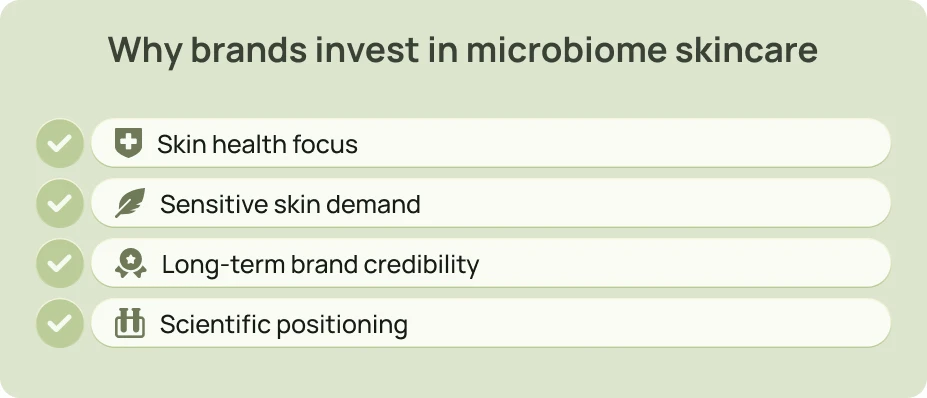
Brands are embracing microbiome skincare because it aligns with skin health, skin barrier protection, and effective skincare positioning rooted in science rather than marketing hype.
When developing a microbiome skincare line, choosing the right manufacturing model is a strategic decision that affects speed to market, formulation flexibility, and brand differentiation. A detailed comparison of white label vs private label manufacturing models is available in the Merywood blog and can help brands determine the most effective production approach for launching microbiome-focused skincare products.
Private Label Opportunities in Microbiome Skincare
Microbiome skincare fits naturally within private label cosmetics strategies. Brands can leverage proven formulations while focusing on education, positioning, and long-term brand equity built around skin health and microbial balance.
Microbiome Friendly Skincare in 2026 and Beyond
Microbiome friendly skincare products in 2026 emphasize gentle formulations, balanced pH, microbial nourishment, and long-term skin resilience. The industry is moving away from aggressive intervention toward maintaining balance and supporting the skin’s natural systems.
Why Microbiome Skincare Represents a New Standard
Microbiome skincare is increasingly seen as the key to improving skin appearance by addressing underlying causes rather than surface-level symptoms. By supporting a healthy microbiome, brands can promote long-term skin health, reduce sensitivity, and strengthen the skin’s natural barrier.
Conclusion: Microbiome Skincare as a Manufacturing Imperative
Microbiome skincare is no longer experimental. It represents a new standard in effective skincare manufacturing, combining microbiome science, formulation expertise, and scalable production. For cosmetic brands planning to enter or expand within the microbiome skincare segment, success depends not only on concept, but on manufacturing competence, formulation stability, and credible claim support.
Collaborating with an experienced manufacturing partner such as Merywood allows brands to translate microbiome science into commercially viable, regulatory-ready products.
From formulation development to scalable production and market positioning, partnering with Merywood enables brands to build microbiome friendly skincare lines that support healthy skin, maintain microbial balance, and meet the expectations of a rapidly evolving global beauty market.